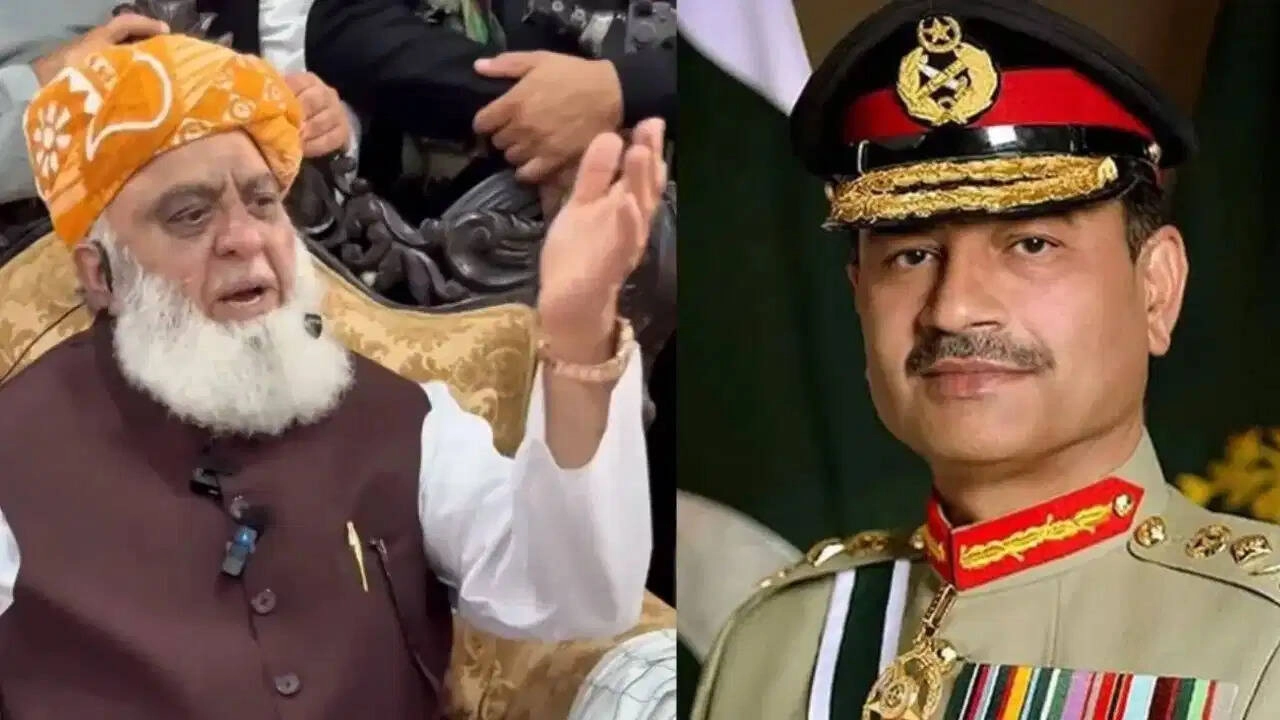
Maulana Fazlur Rehman is a prominent Pakistani politician and religious leader, known for his influential role in shaping the political landscape of the country. He is the head of the Jamiat Ulema-e-Islam (JUI-F), a political party that primarily represents the interests of conservative religious groups. Rehman has been a vocal critic of the military establishment in Pakistan, often challenging its influence over civilian governance. His stance against the military has earned him both support and opposition, as he navigates the complex interplay between religion and politics.
One of the highlights of Rehman’s political career has been his ability to rally support from various factions within the religious community. He has been an advocate for the rights of religious minorities and has often spoken out against policies that he perceives as undermining Islamic values. His rhetoric can be quite fiery, especially when addressing issues such as foreign intervention and the role of Western powers in Pakistan. Rehman has consistently emphasized the importance of maintaining Pakistan’s sovereignty and has called for a more independent foreign policy.
In recent years, Rehman has increasingly focused on challenging the military’s dominance in Pakistani politics, particularly in response to the political maneuvers of figures like Asim Munir, the current Chief of Army Staff. Rehman’s calls for the military to step back from politics have resonated with a segment of the population that is weary of military interventions in civilian affairs. He has stated that the military should focus on its primary responsibilities, rather than exerting influence over political matters. This perspective has positioned him as a significant figure in the ongoing discourse about the balance of power between civilian and military authorities in Pakistan.
Rehman’s political journey has seen him oscillate between being a pragmatic politician and a staunch defender of religious values. His ability to foster coalitions among various religious and political groups has made him a crucial player in the opposition against the government’s policies. He has not hesitated to express his views on issues ranging from economic policy to social justice, all while framing them within the context of Islamic teachings. As Pakistan continues to grapple with its political identity, Rehman’s role as a challenger to figures like Asim Munir will likely shape the future of the country’s governance and civil-military relations.