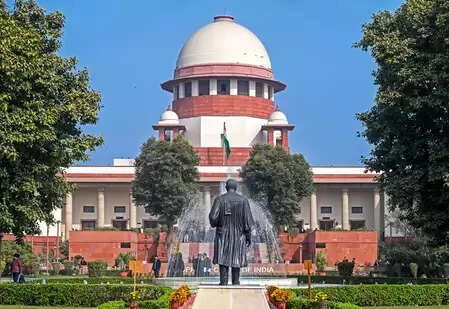
The Supreme Court of India recently dismissed a petition that sought a Central Bureau of Investigation (CBI) inquiry into the confidence motion held in Tamil Nadu. This decision has significant implications for the political landscape in the state, where the trust vote has been a point of contention among various political factions. The petitioners had argued that the trust vote was conducted under questionable circumstances and that a thorough investigation by the CBI was necessary to ensure transparency and accountability in the process.
The Supreme Court’s rejection of the plea indicates its stance on maintaining judicial restraint in matters that are primarily political in nature. By declining to intervene, the court has implicitly affirmed the legitimacy of the legislative procedures followed during the trust vote. This outcome may provide a sense of stability for the ruling party in Tamil Nadu, allowing it to focus on governance without the cloud of an investigation hanging overhead.
The demand for a CBI probe reflects the ongoing tensions in Tamil Nadu’s political sphere, where allegations of corruption and irregularities are not uncommon. Political opponents often seek judicial intervention to challenge the actions of the ruling party, hoping to leverage the legal system to gain an upper hand. However, the Supreme Court’s recent ruling serves as a reminder that the judiciary is cautious about stepping into the domain of political disputes, emphasizing the need for political entities to resolve their differences through democratic means rather than relying on the courts.
In conclusion, the Supreme Court’s dismissal of the petition for a CBI investigation into the Tamil Nadu trust vote underscores the importance of separating judicial oversight from political matters. As the state navigates its complex political environment, this ruling may influence future strategies employed by political parties in their attempts to challenge or support the actions of the government. The ruling also highlights the judiciary’s role in ensuring that legal processes do not become a tool for political maneuvering, thus maintaining the integrity of both the judicial and legislative systems.