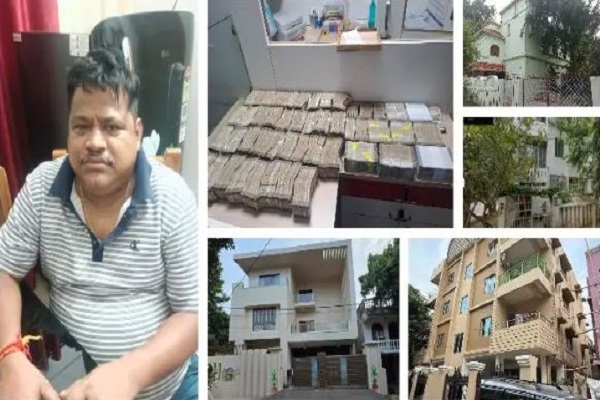
Recent investigations into the financial dealings of an Assistant Engineer in Odisha have uncovered a staggering amount of wealth. Authorities revealed that the engineer possesses assets totaling approximately 2.4 crore Indian Rupees in cash alone. This discovery raises significant questions about the sources of such wealth, especially considering the relatively modest salary typically associated with government positions in India. The sudden accumulation of such a vast fortune suggests potential involvement in corrupt practices or illicit means of income generation.
In addition to the substantial cash reserves, the engineer’s real estate holdings are equally impressive. Reports indicate ownership of five multi-storey buildings, which are valuable assets in the urban landscape of Odisha. Furthermore, the engineer is linked to 13 to 14 expensive plots of land, strategically located in prime areas. The value of these properties could significantly amplify the total wealth attributed to this individual, further emphasizing the need for thorough scrutiny into their financial activities.
The revelations have sparked public outrage and demands for accountability within the ranks of government officials. Citizens expect transparency and integrity from public servants, and such discoveries undermine trust in governmental institutions. As investigations continue, there is hope that this case will serve as a catalyst for broader reforms in corruption prevention and enforcement mechanisms within the state. Ensuring that public servants are held accountable for their assets is crucial in the fight against corruption and in restoring faith in governance.