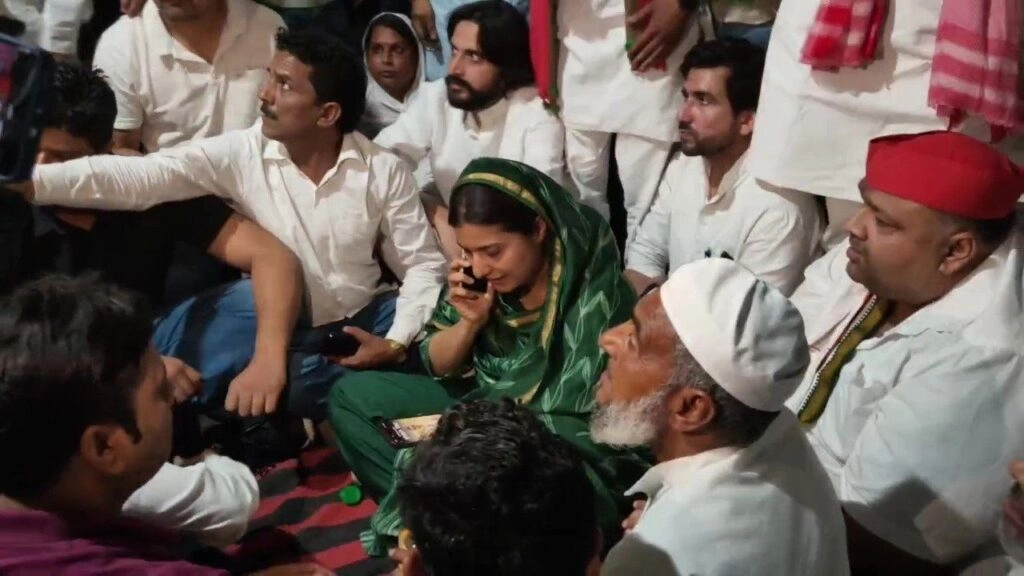
MP Iqra Hasan has taken a bold stand by staging a hunger strike at the local police station, demanding either her arrest or the release of the detained leaders from her party. This dramatic protest highlights the escalating tensions between political figures and law enforcement in the region. Iqra Hasan, a prominent member of the opposition, has long been an advocate for democratic rights and has consistently voiced her concerns about the government’s crackdown on dissent. Her decision to sit in protest within the confines of the police station serves as a powerful statement about the injustices faced by political leaders and activists who are often targeted for their beliefs.
The situation has garnered significant attention and support from her constituents and fellow politicians, who view her actions as a courageous fight against oppression. By placing herself in such a vulnerable position, Iqra Hasan is not only drawing attention to the plight of her colleagues but also demonstrating her commitment to the principles of democracy and justice. Her strike is a call to action for the public and fellow lawmakers to rally against what she describes as an abuse of power by authorities. The demand for either her arrest or the release of the leaders underscores the urgency of the situation, emphasizing the need for accountability and respect for political freedoms.
As news of her protest spreads, the police have faced mounting pressure from the public and various human rights organizations to address the concerns raised by Iqra Hasan. The incident raises important questions about the limits of state authority and the rights of individuals to peacefully protest against perceived injustices. In a climate where political dissent is often met with harsh reprisals, Iqra Hasan’s hunger strike symbolizes a significant moment in the struggle for democratic rights and serves as a reminder of the enduring fight for justice in the face of adversity. The coming days will be critical in determining the outcome of her protest and the broader implications for political discourse in the country.