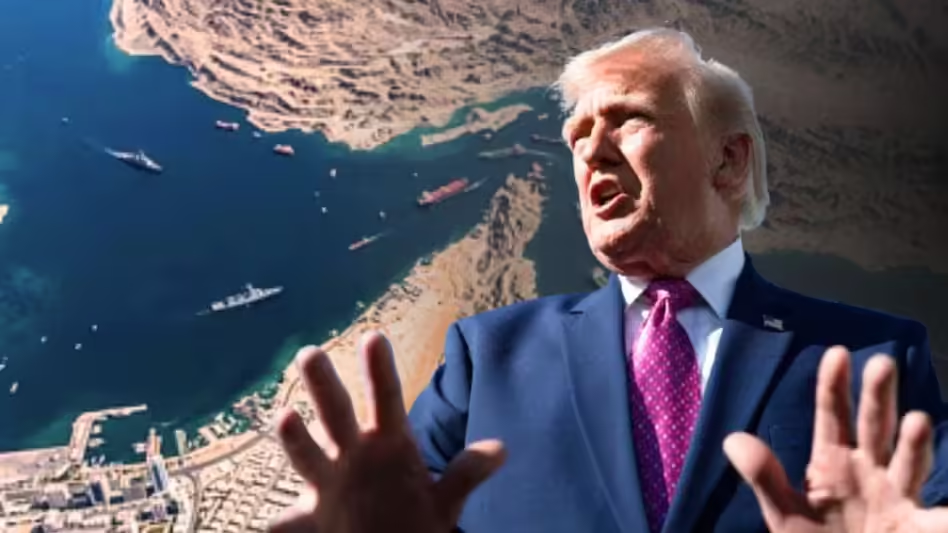
The closing of the Strait of Hormuz has significantly heightened tensions for the United States, potentially leading to severe repercussions for former President Donald Trump. The Strait of Hormuz is a critical maritime passage that facilitates the transportation of a substantial portion of the world’s oil supply. Any disruption in this strategic waterway not only affects global oil prices but also poses a threat to international trade and security.
As the geopolitical landscape becomes increasingly volatile, the U.S. finds itself in a precarious position. The closure of the Strait could lead to a spike in oil prices, impacting the American economy and straining relations with allied nations that rely on oil imports from the Gulf region. The Trump administration’s past decisions and policies in the Middle East may come under scrutiny, as critics argue that increased tensions could have been mitigated through more diplomatic approaches.
Moreover, the potential for military conflict in the region is a looming concern. The U.S. has significant military assets in the area, and any escalation could lead to direct confrontations with regional powers. Trump’s foreign policy legacy could be questioned if the situation deteriorates, as it may be seen as a failure to maintain stability in a critical area of global interest. In light of these developments, the former president may have to navigate the complex ramifications of the Strait’s closure, as it could impact his political standing and future endeavors.