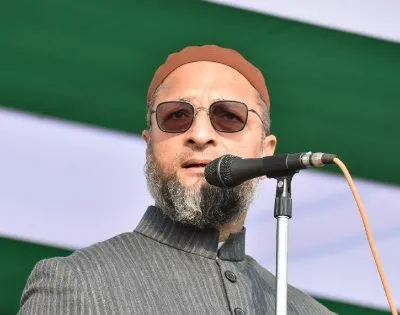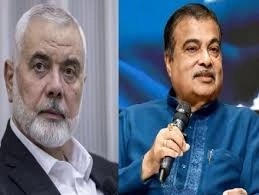
Nitin Gadkari, the Indian Minister for Road Transport and Highways, was present at a significant event just hours before the assassination of Hamas Chief, Ismail Haniyeh. This unexpected attendance has raised eyebrows and sparked discussions about the implications of such a meeting in the context of international relations and security. The timing of Gadkari’s appearance at the event, which coincided with a pivotal moment in the ongoing conflict involving Hamas, has led to speculation regarding the nature of the discussions that took place and their potential impact on India’s foreign policy, especially in relation to the Middle East.
The event itself was marked by a gathering of various political leaders and dignitaries, with discussions that likely revolved around issues of regional stability and the ongoing tensions in Gaza. Gadkari’s involvement signifies India’s complex diplomatic stance, as the nation seeks to navigate its relationships with countries in the Middle East while also aligning itself with its strategic partners. Such engagements are crucial for India, which has been trying to balance its interests in the region, particularly amid escalating conflicts and humanitarian crises.
In light of the assassination of Haniyeh, the ramifications of Gadkari’s attendance could be substantial. Analysts are now pondering how this incident will influence India’s approach to the conflict and its relations with Palestinian groups. The assassination not only highlights the volatility of the situation but also poses questions about the future of political dialogue in the region. As India continues to develop its foreign policy, events like this will play a critical role in shaping its stance and interactions with various factions involved in the ongoing struggle for power and recognition in the Middle East.