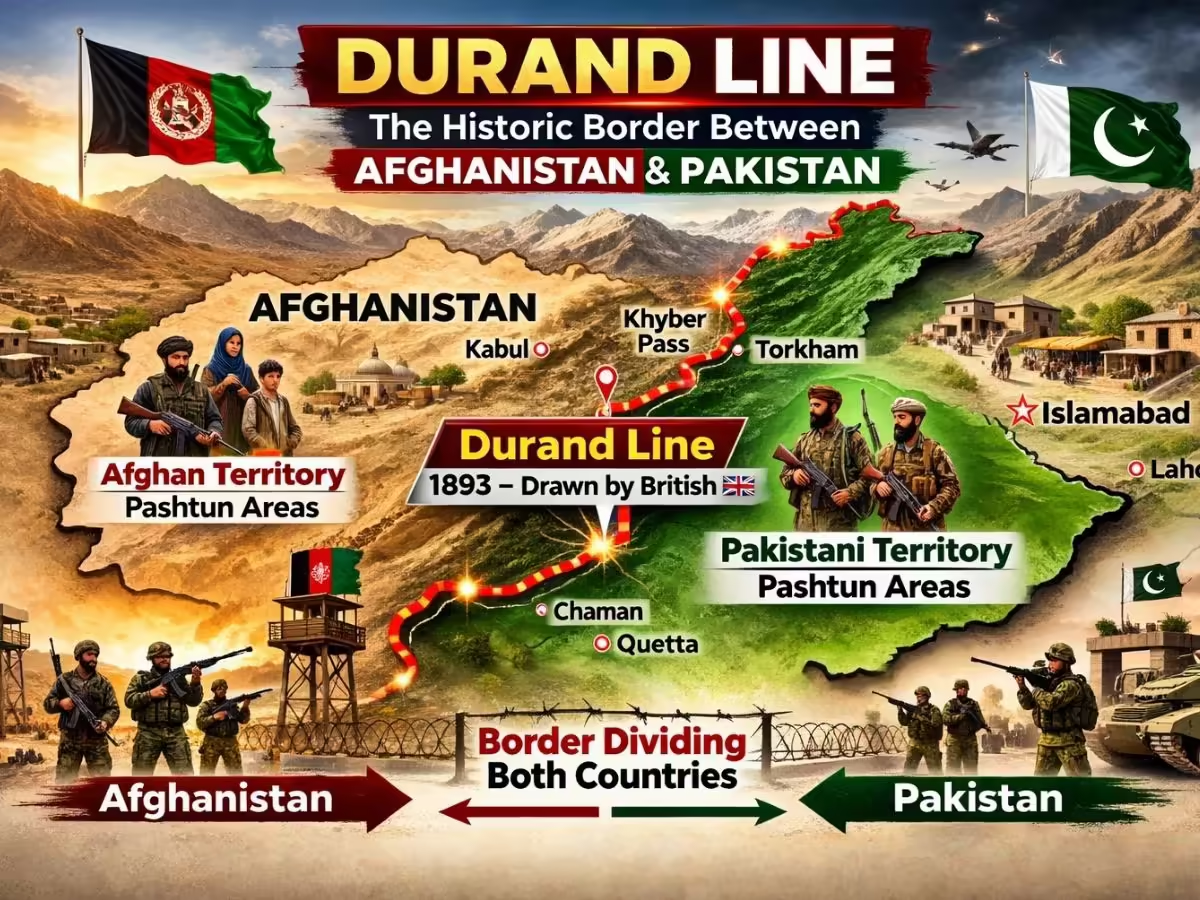
The Durand Line is a contentious border that separates Afghanistan and Pakistan, established in 1893 through an agreement between British India and Afghanistan’s Amir Abdur Rahman Khan. This line was named after Sir Mortimer Durand, the British diplomat who negotiated the border. The Durand Line stretches approximately 2,640 kilometers and divides various ethnic groups, including Pashtuns, who inhabit both sides of the border. This division has led to significant tensions and conflicts over the years, as many people on both sides do not recognize the legitimacy of the border.
The historical backdrop of the Durand Line is marked by colonial ambitions and the geopolitical strategies of the British Empire. The British aimed to create a buffer zone to safeguard their Indian territories from Russian expansion during the so-called “Great Game.” However, the agreement was never fully accepted by the Afghan rulers, and subsequent Afghan governments have consistently contested the validity of the Durand Line. This ongoing dispute has fueled a series of violent confrontations and has complicated relations between Afghanistan and Pakistan.
In the modern context, the Durand Line has become a focal point for various conflicts, including issues related to militancy, cross-border terrorism, and refugee crises. The porous nature of the border has allowed for the movement of militant groups, further exacerbating security challenges for both nations. Additionally, the ethnic ties that bind the Pashtun communities on either side of the line have created a sense of shared identity, which complicates nationalistic sentiments and territorial claims.
The situation is further complicated by international dynamics, with external powers often influencing the region’s stability. Both Afghanistan and Pakistan have faced internal challenges, including governance issues and economic hardships, which have made it difficult for them to address the complexities surrounding the Durand Line. As a result, the historical and contemporary significance of this border continues to shape the geopolitical landscape of South Asia, making it a critical area of concern for regional peace and security.