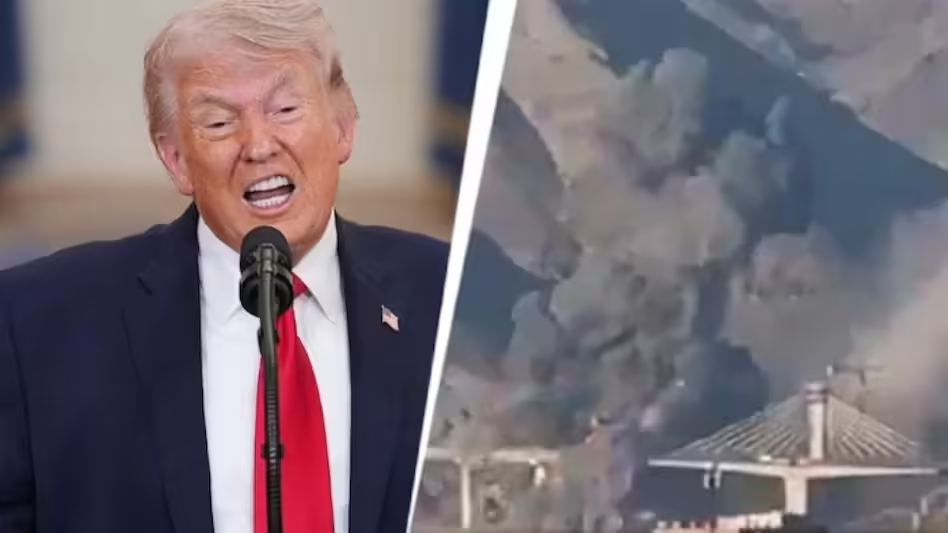
After the devastating collapse of a bridge in Iran, which reportedly incurred losses amounting to around 37,000 crore, former U.S. President Donald Trump issued a stern warning to the Iranian government. He emphasized the need for Iran to engage in negotiations, suggesting that failure to do so could lead to severe consequences. The catastrophic event has not only raised concerns about infrastructure safety in the nation but has also sparked a broader conversation about Iran’s economic stability and its political relations with other countries.
Trump’s warning reflects the ongoing tensions between the United States and Iran, which have been characterized by a series of sanctions, diplomatic standoffs, and military threats. The collapse of such a significant infrastructure project serves as a reminder of the vulnerabilities that Iran faces, both domestically and internationally. It underscores the importance of political stability and economic resilience, especially in light of external pressures. Trump’s call for negotiation could be seen as an opportunity for Iran to reassess its diplomatic strategies and seek a path toward stabilizing its economy.
The aftermath of the bridge collapse may also have far-reaching implications for the Iranian leadership. With public sentiments likely running high due to the economic losses and potential safety concerns, the government may feel pressured to address these issues more proactively. Engaging in talks with the U.S. could be seen as a way to alleviate some of the mounting pressures, but it also poses risks, as it could be viewed unfavorably by hardline factions within the country. The situation remains delicate, and how Iran responds to Trump’s warning could shape its future trajectory in both domestic and international arenas.