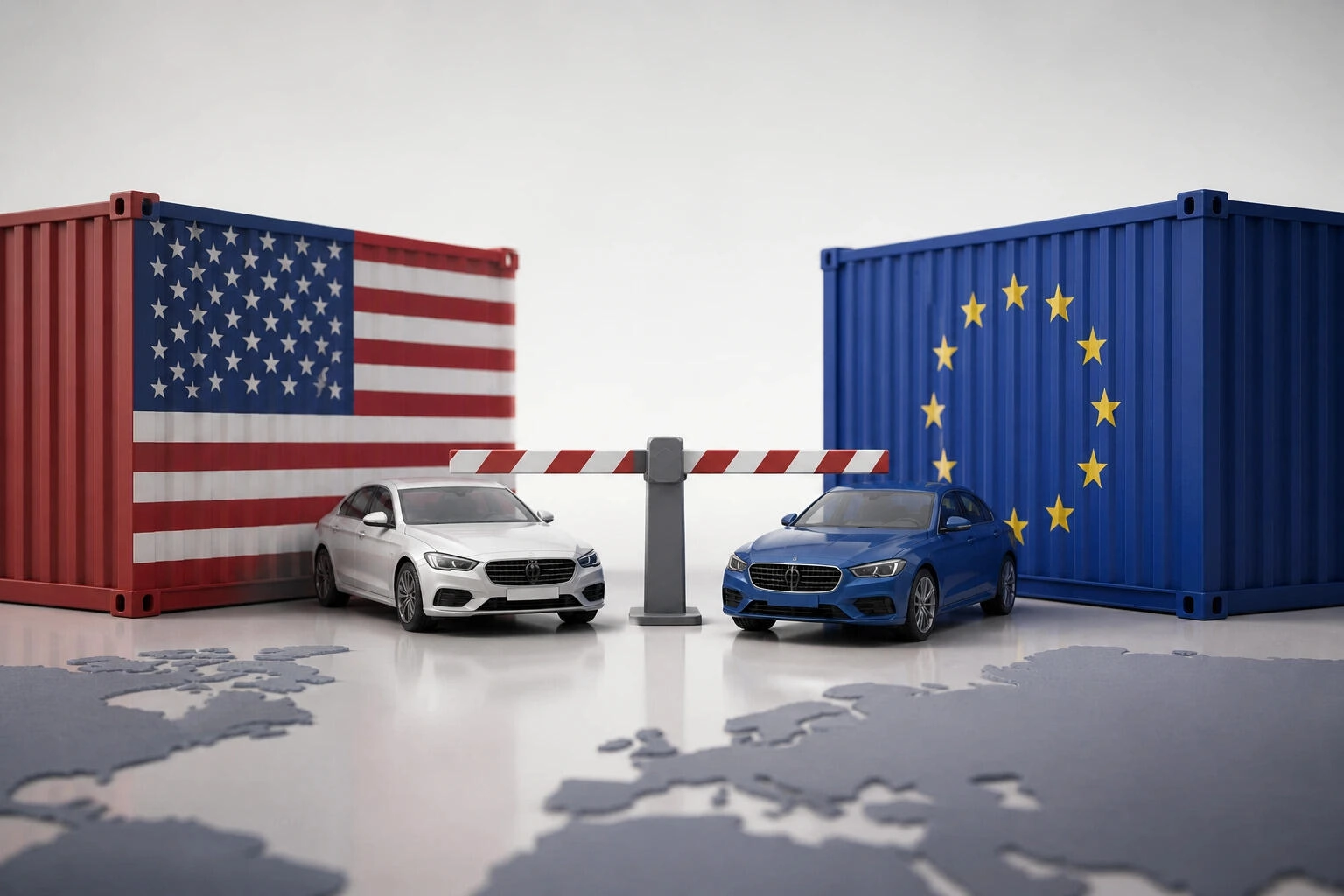
The recent imposition of a 25% tariff by former President Donald Trump has sent shockwaves through the European car industry, leading to significant disruptions in trade relations between the United States and Europe. This bold move was aimed at protecting American manufacturers and reducing the trade deficit, but it has had far-reaching consequences that extend beyond the borders of the U.S. The European automotive sector, which heavily relies on exports to the U.S. market, now faces increased costs and competitive disadvantages. As a result, several major trade deals that were previously in the pipeline have been jeopardized, creating a ripple effect across the global automotive landscape.
The decision to implement such high tariffs has not only strained business relationships but has also raised concerns among consumers and industry experts alike. Higher tariffs typically lead to increased prices for imported vehicles, which could discourage American consumers from purchasing European cars. This, in turn, could impact sales figures for European manufacturers, forcing them to reconsider their strategies in the U.S. market. As automakers reassess their operations, some may even consider relocating production facilities to mitigate the financial impact of the tariffs, further complicating international trade dynamics.
Moreover, the fallout from these tariffs isn’t limited to the automotive sector alone. The broader implications could affect various industries that rely on the supply chain interconnectedness between the U.S. and Europe. Suppliers, parts manufacturers, and even service providers may find themselves caught in the crossfire of these trade tensions, leading to job losses and economic instability in regions dependent on automotive production. As both sides grapple with the consequences of this trade policy, it becomes increasingly clear that the decision to impose such tariffs has far-reaching implications that could shape the future of transatlantic trade relations for years to come.
In the wake of this tariff bomb, discussions around trade negotiations are expected to intensify, with both parties seeking ways to mitigate the damage and restore a semblance of normalcy. While some may argue that the tariffs are necessary for protecting domestic industries, others believe that they could lead to retaliatory measures and further escalation of trade wars. As the situation unfolds, it remains to be seen how both Europe and the United States will navigate these choppy waters and whether a compromise can be reached to facilitate smoother trade relations moving forward.