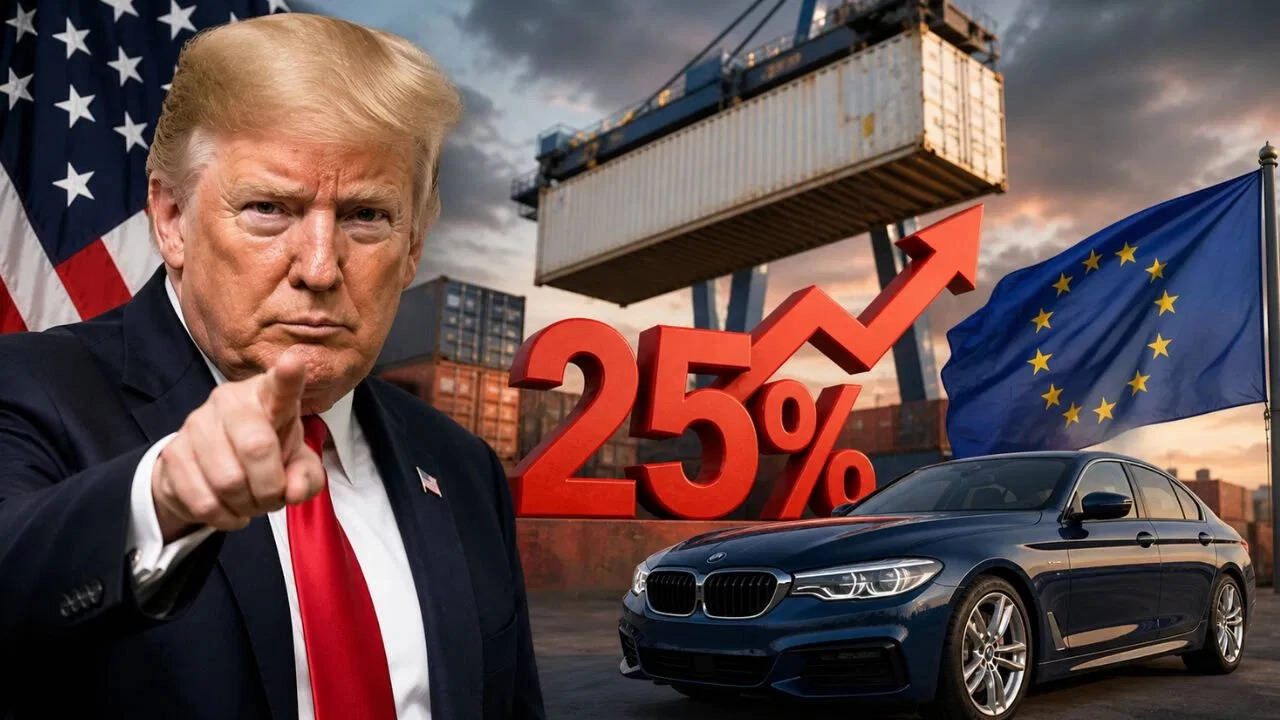
The United States has made a significant economic decision that could have far-reaching implications for international trade, particularly concerning the automotive industry. Recently, former President Donald Trump announced a substantial 25% tariff on cars imported from the European Union. This move is part of a broader strategy to protect American manufacturers and promote domestic production, but it also raises concerns about potential retaliatory measures from European nations.
The decision comes amid ongoing discussions about trade relations between the U.S. and the EU, which have been tense in recent years due to various trade disputes. The imposition of such a high tariff could lead to increased prices for consumers in the U.S., as well as potential shortages of European vehicles. This could especially impact luxury car markets, where European brands like BMW, Audi, and Mercedes-Benz are prominent players.
In the video accompanying the announcement, Trump emphasized the need to prioritize American jobs and industries, arguing that the tariffs are a necessary step to level the playing field for American manufacturers. Critics, however, warn that these tariffs could escalate trade tensions and lead to a trade war, which might ultimately hurt American consumers and the economy as a whole. The long-term effects of this tariff policy will likely depend on how the European Union responds and whether negotiations can be pursued to reach a more balanced trade agreement.
As this situation develops, it is crucial for stakeholders in both the U.S. and Europe to closely monitor the implications of these tariffs. The automotive industry is a vital sector for both economies, and any disruptions could have significant consequences not just for manufacturers, but also for consumers and the overall economic landscape. The decision underscores the complexities of global trade and the challenges of balancing national interests with international relations.