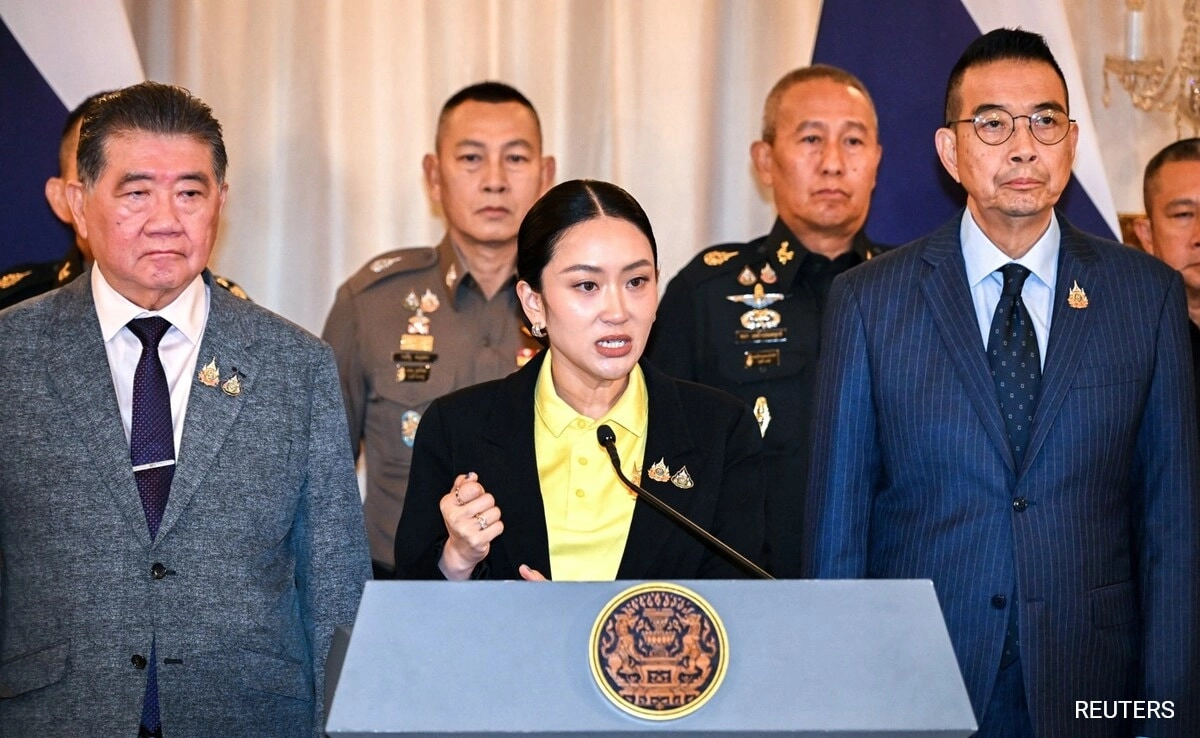
In the wake of Paetongtarn Shinawatra’s recent ouster, Thailand finds itself in a precarious political landscape characterized by fierce rival camps vying for power. The Shinawatra family has long been a dominant force in Thai politics, and Paetongtarn’s removal has created a significant power vacuum that various factions are eager to fill. The political scene is now marked by a struggle between traditional power brokers and emerging political entities, all attempting to assert their influence in a country that has seen its share of political upheaval.
As political parties and their supporters navigate this tumultuous environment, the stakes have never been higher. The opposition is particularly active, rallying around a narrative that seeks to capitalize on the discontent among the populace. Many citizens are disillusioned with the status quo, prompting calls for reform and transparency in governance. Meanwhile, loyalists to the Shinawatra legacy remain committed to reclaiming their influence, arguing that the removal of Paetongtarn was unjust and a setback for democracy. This division has intensified the already polarized political climate in Thailand, where allegiances often shift rapidly and unpredictably.
Amid this chaos, the military’s role cannot be overlooked. Historically, the Thai military has intervened during times of political instability, and its stance in the current situation is closely monitored by both supporters and detractors. Some factions believe that the military may seek to consolidate power under the guise of stability, while others hope that it will remain neutral, allowing a more democratic process to unfold. The next steps taken by these rival camps will be crucial in determining the future direction of Thailand, as the country grapples with not only the immediate ramifications of Paetongtarn’s ouster but also the broader implications for its political landscape and the rule of law.
As various political actors jostle for position, the public’s response will be a key determinant in shaping the trajectory of Thai politics. Citizen engagement, protests, and demands for accountability may influence the strategies of political factions and compel them to reconsider their approaches. The situation remains fluid, and as rival camps maneuver to fill the power void, Thailand stands on the brink of potential change that could redefine its political identity for years to come. The outcome of this power struggle will not only impact the immediate political situation but also the future of governance and democracy in Thailand.