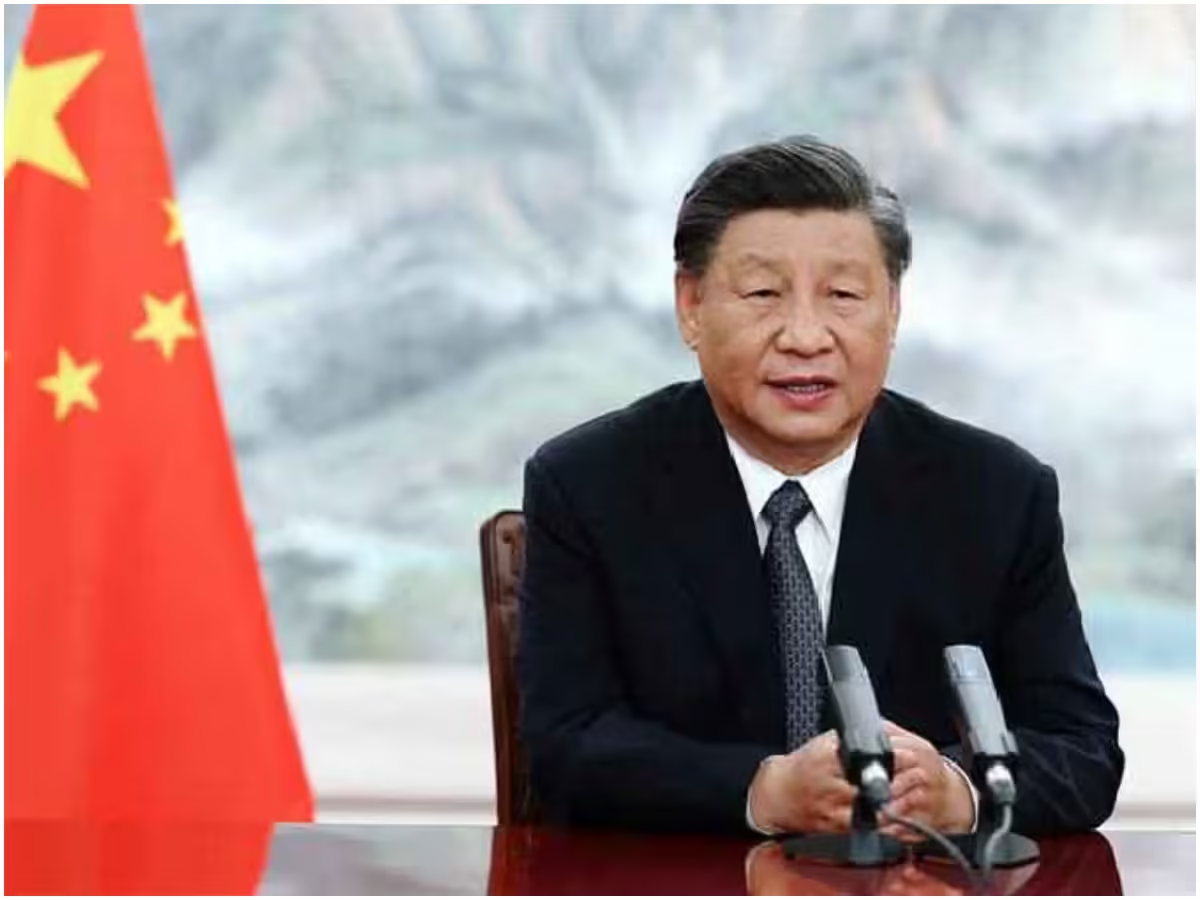
The recent scandal involving China’s nuclear missile program has sent shockwaves through the military and political landscape. Reports indicate that a general under President Xi Jinping has been implicated in a serious breach of security protocols. Allegedly, this high-ranking official manipulated the missile’s fuel system, substituting the highly critical propellant with water. This reckless act not only jeopardizes the effectiveness of the nuclear arsenal but also raises alarming questions about the integrity of the military leadership.
The implications of this incident are profound. A nuclear missile, designed for deterrence and defense, relies on precise engineering and the highest standards of safety and reliability. By introducing an inert substance like water into the fuel system, the general’s actions could have rendered the missiles completely inoperable. This blatant disregard for protocol is not merely a technical failure; it reflects a deeper systemic issue within the military hierarchy, where accountability and oversight may be severely lacking.
The fallout from this scandal could potentially destabilize China’s military strategies and provoke international concerns about nuclear safety. Observers worry that such a breach could lead to a loss of confidence both domestically and on the global stage. Other nations may question China’s nuclear capabilities, prompting a reevaluation of their own defense policies in response to perceived vulnerabilities. As investigations unfold, it remains to be seen how the Chinese government will address this crisis and restore credibility to its military operations. The incident serves as a stark reminder of the critical importance of maintaining stringent security measures in the realm of nuclear weapons.