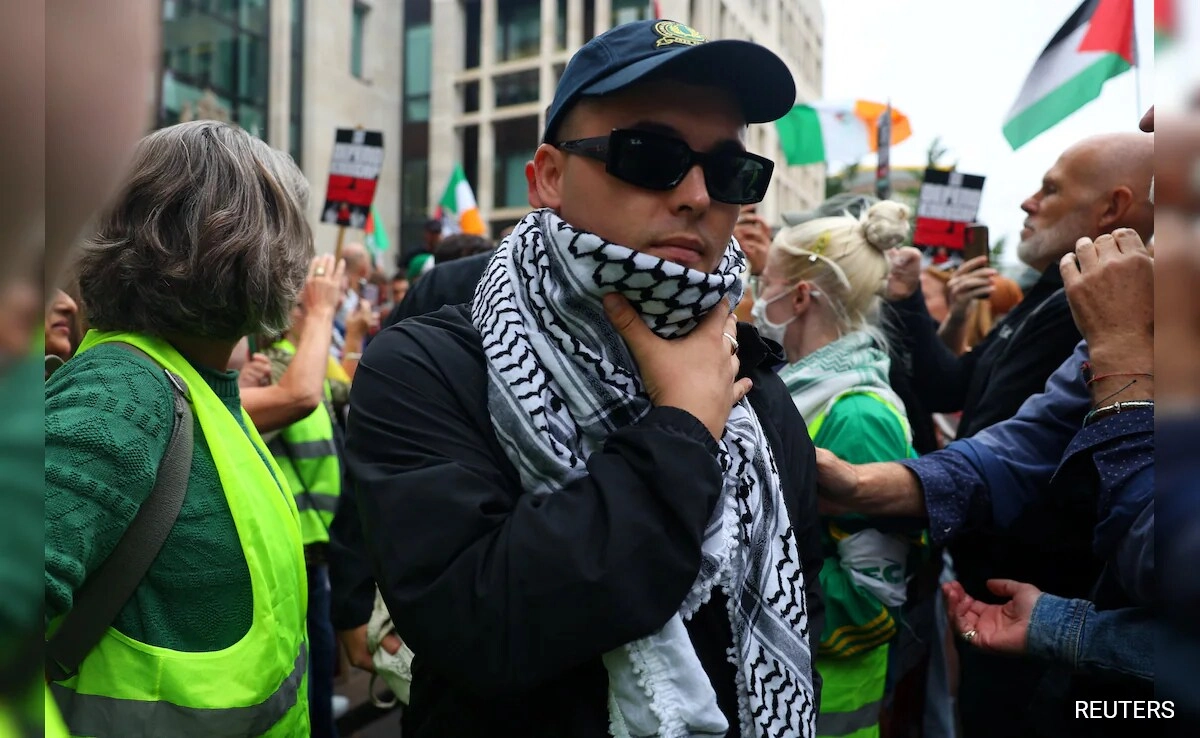
Kneecap, an Irish rap group known for their provocative and politically charged lyrics, recently found themselves in the spotlight for reasons far beyond their music. One of the group’s members appeared in court facing serious charges related to terrorism, stemming from an incident involving the display of a Hezbollah flag. This incident has sparked intense debate about freedom of expression, the boundaries of artistic performance, and the implications of political symbolism in contemporary society.
The controversy erupted when the member was accused of using the flag of Hezbollah, a group designated as a terrorist organization by several countries, including the United States and the European Union, during a performance. The display was perceived by some as a blatant endorsement of a group that has been involved in numerous violent acts and conflicts. Critics argue that such actions can incite violence and promote extremist ideologies, especially among impressionable youth who are drawn to the music and culture surrounding hip-hop.
Supporters of Kneecap and the accused member argue that their actions were a form of artistic expression and a critique of political issues, rather than an endorsement of Hezbollah’s activities. They contend that artists often use provocative symbols to challenge the status quo and raise awareness about various social and political injustices. This incident has reignited discussions about the responsibilities of artists in their work and the extent to which freedom of speech should protect controversial or inflammatory expressions.
As the case progresses, it raises important questions about the intersection of art, politics, and law. The outcome could have significant implications for how similar cases are handled in the future, particularly in a global context where the lines between art and activism are increasingly blurred. The Kneecap situation serves as a reminder of the power of music as a form of protest and the complexities that arise when art confronts sensitive political issues. As the court proceedings unfold, many will be watching closely to see how this case is resolved and what it might mean for artists navigating the charged terrain of political expression.