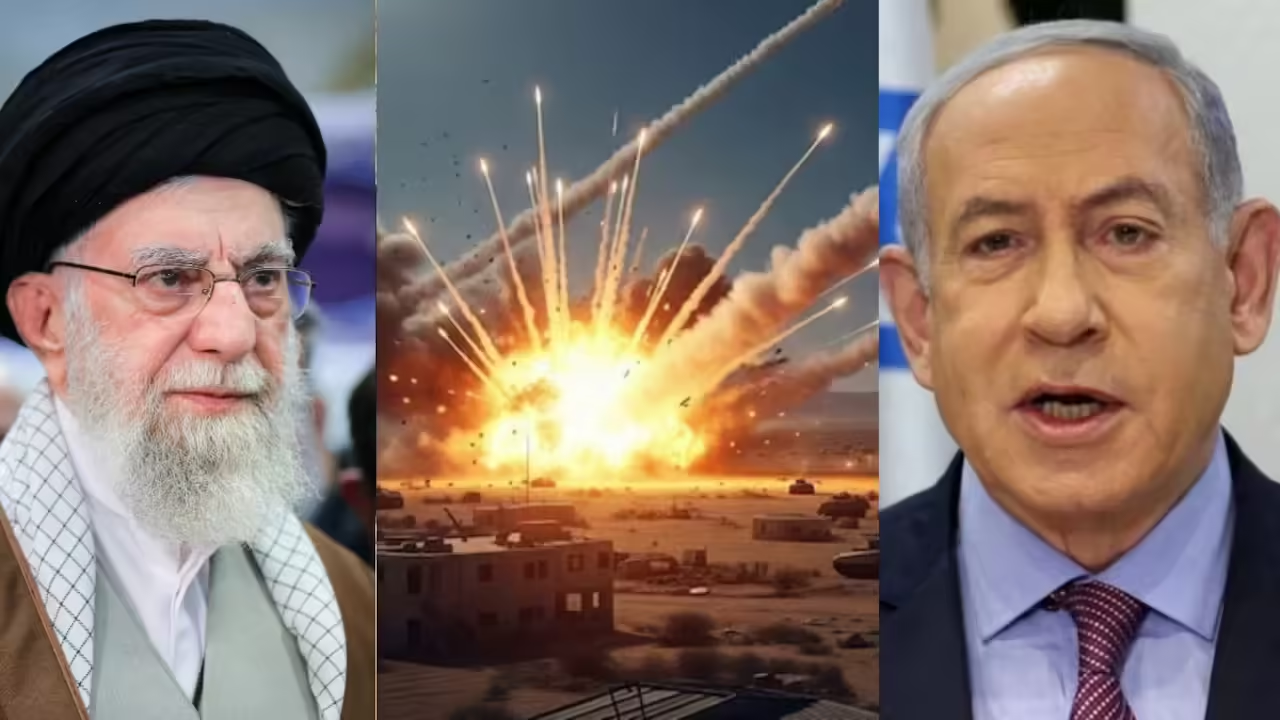
The recent conflict between Iran and Israel has raised significant concerns in the international community, following similar tensions observed in the Pakistan-Afghanistan region. The roots of this conflict are deeply embedded in geopolitical, ideological, and territorial disputes. Iran, a predominantly Shia Muslim country, and Israel, a Jewish state, have long been at odds due to their opposing political ideologies and regional ambitions.
The primary cause of the current hostilities can be traced back to Iran’s support for various militant groups that are opposed to Israel, including Hezbollah in Lebanon and Hamas in the Gaza Strip. These groups have engaged in numerous confrontations with Israel, leading to a cycle of retaliation that has escalated tensions further. Israel perceives Iran’s nuclear ambitions as an existential threat, fearing that a nuclear-armed Iran would dramatically shift the balance of power in the Middle East.
Additionally, the ongoing conflicts in Syria have further complicated the situation. Iran has been active in supporting the Assad regime, while Israel has conducted airstrikes to prevent Iranian entrenchment near its borders. The strategic landscape is further complicated by the involvement of other regional and global powers, each with their own interests in the outcome of this conflict. The situation remains volatile, with the potential for escalation posing a significant risk not only to the countries directly involved but also to the broader stability of the region.
Understanding the underlying causes of the Iran-Israel conflict is crucial for any efforts aimed at de-escalating tensions. Diplomatic initiatives will require addressing the intricate web of alliances and enmities that characterize the Middle East, alongside acknowledging the deep-seated historical grievances that fuel animosity between these nations. The path to peace is fraught with challenges, but it is essential for the future stability of the region and the safety of its inhabitants.