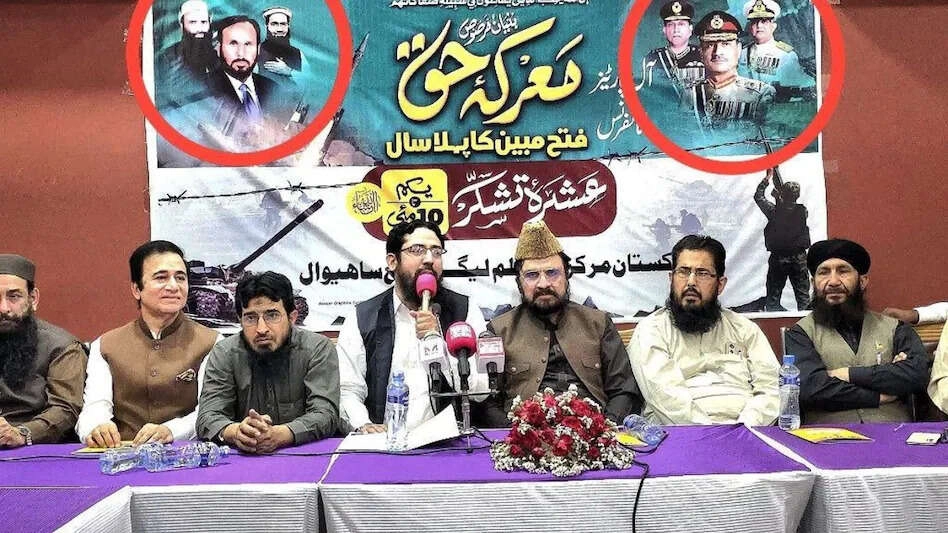
On the anniversary of Operation Sindoor, a controversial poster has emerged from Pakistan, raising significant concerns about the implications of its content. The poster appears to depict a connection between the military forces of Pakistan and the militant group Lashkar-e-Taiba, suggesting a troubling alliance that could have far-reaching consequences. This visual representation has sparked intense debates within the international community about the role of state-sponsored terrorism and the ongoing conflict in the region.
The operation, which is remembered for its critical military objectives, has now become a focal point for discussions surrounding terrorism and national security. The juxtaposition of the Pakistani army and a known terrorist organization in the same imagery raises questions about the extent to which state and non-state actors are collaborating. Critics argue that such representations not only glorify acts of violence but also undermine efforts toward peace and stability in South Asia.
Moreover, the timing of the poster’s release is particularly provocative, coinciding with heightened tensions in the area due to recent military and political developments. As international attention turns towards Pakistan’s internal policies and its approach to combating terrorism, this poster serves as a stark reminder of the complexities that lie within the nation’s security landscape. The implications of such associations could hinder diplomatic efforts aimed at resolving longstanding conflicts and fostering cooperation in the region.
In conclusion, the emergence of this controversial poster on the anniversary of Operation Sindoor invites scrutiny into the relationships between state and non-state actors in Pakistan. It emphasizes the challenges that lie ahead in addressing terrorism and ensuring national security while promoting peace. As discussions continue, it is crucial for the international community to engage with these issues thoughtfully and constructively, seeking pathways that prioritize stability and reconciliation over violence and division.