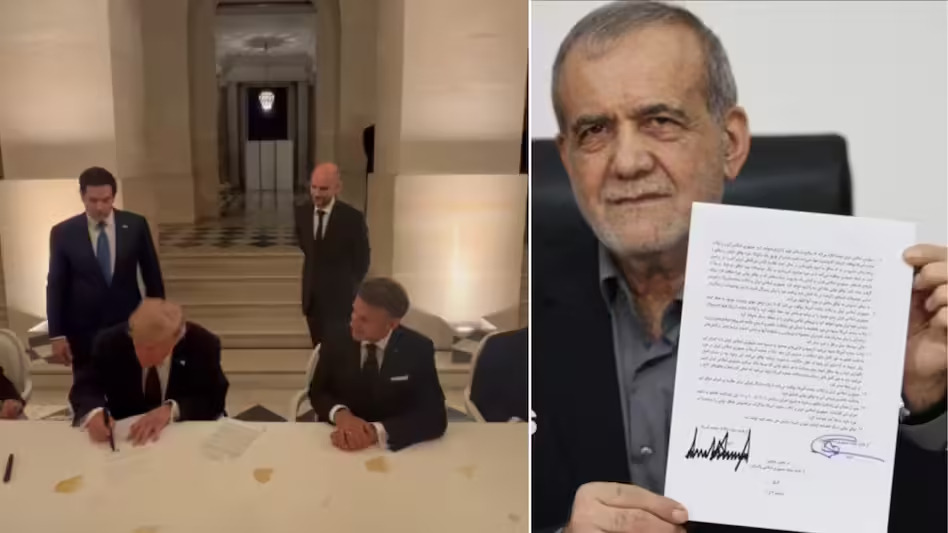
The 14-point deal between the United States and Iran has generated significant interest and speculation regarding its content and implications. This agreement, which was reportedly signed by former President Donald Trump and Iranian representative Javad Zarif, outlines various commitments and understandings between the two nations. Among the notable aspects of the deal is its inclusion of Pakistan, which suggests that the agreement may have broader geopolitical ramifications in the region.
The points of the deal are expected to cover critical issues such as nuclear proliferation, regional security, and economic cooperation. The involvement of Pakistan indicates a desire to foster a multilateral approach to these complex challenges. It underscores the strategic position of Pakistan in South Asia and its potential role as a mediator or partner in discussions concerning Iran and the United States. This inclusion could also hint at an effort to stabilize relations in a region that has seen significant turmoil in recent years.
Furthermore, the deal’s framework may aim to address not only the immediate concerns between the U.S. and Iran but also the interconnected dynamics involving neighboring countries. By incorporating Pakistan into these discussions, the deal reflects an understanding that regional stability is contingent upon cooperation among various stakeholders. The broader implications of such a partnership could lead to enhanced diplomatic relations and a more coordinated approach to tackling issues like terrorism, trade, and energy security in the region.
In essence, the 14-point deal is not just a bilateral agreement between the U.S. and Iran; it serves as a potential catalyst for a larger dialogue involving multiple nations, emphasizing the interconnected nature of international politics. As the details of the agreement emerge, it will be crucial to analyze how these points will be implemented and what they mean for the future of U.S.-Iran relations and the stability of the South Asian region as a whole.