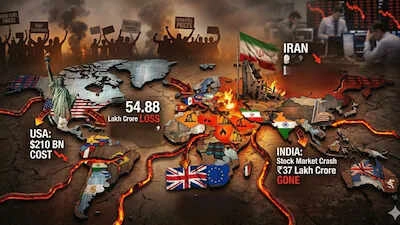
The devastation caused by the war has left a profound impact, with over 4,000 reported deaths and an astronomical financial loss estimated at ₹54.88 lakh crore. This staggering figure underscores the extensive toll that conflict can take on a nation, its economy, and its people. The repercussions of war extend far beyond immediate casualties; they ripple through society, affecting infrastructure, healthcare, education, and the overall quality of life for millions.
In analyzing the aftermath, it is crucial to identify which country has suffered the most significant blow. The consequences of such a large-scale conflict resonate deeply within the affected nation, leading to long-term challenges that can take generations to overcome. The loss of life is not just a statistic; it represents families shattered, communities disrupted, and a future that has been irrevocably altered.
Furthermore, the economic repercussions are staggering. A loss of ₹54.88 lakh crore suggests that the war has disrupted various sectors, leading to unemployment, poverty, and a decline in public services. The rebuilding process will be daunting and resource-intensive, requiring both domestic effort and international support. As the global community observes these developments, the call for peace and resolution becomes more urgent, emphasizing the need for diplomatic solutions to prevent further loss and suffering.