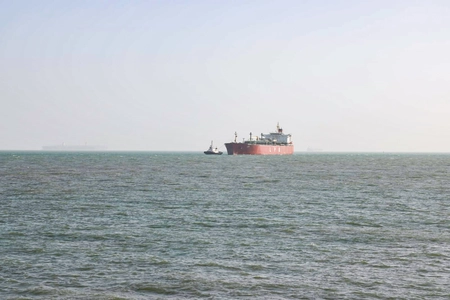
According to a recent report, ship traffic in the Strait of Hormuz has reached 57% of pre-war levels. This significant statistic highlights the ongoing impact of geopolitical tensions on maritime activities in this critical waterway. The Strait of Hormuz is a vital passage for global oil shipments, as it connects the Persian Gulf with the Arabian Sea. The region has been a focal point of international trade and diplomacy, especially given that a substantial portion of the world’s oil supply transits through these waters.
The report suggests that despite the challenges posed by the ongoing conflict, shipping operations are gradually resuming, although they are still not at full capacity. Various factors contribute to the reduced traffic levels, including heightened security concerns and the potential for military confrontations. Shipping companies and operators must navigate these complexities while ensuring the safety of their vessels and crews. The situation in the Strait of Hormuz is closely monitored by governments and international organizations, as any disruption could have far-reaching consequences for global oil prices and economic stability.
Furthermore, the recovery in ship traffic can be seen as a positive sign, indicating a degree of resilience in the maritime industry. Nevertheless, stakeholders remain cautious, as the geopolitical landscape remains volatile. The complexities of navigating through the Strait of Hormuz underscore the intricate relationship between international relations and global trade. As the situation evolves, it will be crucial for businesses and governments alike to adapt to the changing dynamics of shipping in this strategically important region.