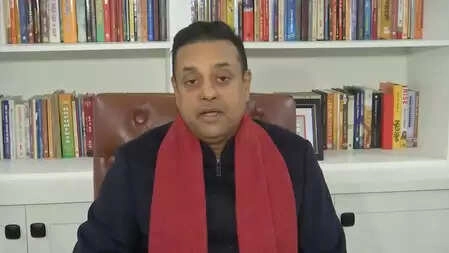
Sambit Patra, a prominent spokesperson for the Bharatiya Janata Party (BJP), recently targeted Sonia Gandhi in a statement that has sparked considerable debate. He accused her of attempting to tarnish the image of the BJP by making false allegations against the party. Patra’s remarks reflect a broader trend in Indian politics where leaders from opposing parties often engage in a war of words, each accusing the other of dishonesty and manipulation. This particular exchange highlights the ongoing tensions between the BJP and the Indian National Congress, as both parties vie for influence and public support.
In his comments, Patra emphasized that the BJP remains committed to transparency and accountability, asserting that the party operates with integrity. He suggested that Gandhi’s accusations are not just baseless but are part of a calculated strategy to divert public attention from the Congress party’s own shortcomings. By framing the narrative in this way, Patra aims to reinforce the BJP’s position as a party that stands for truth and justice, contrasting it with what he describes as the Congress’s penchant for spreading misinformation.
The political landscape in India is often characterized by such confrontations, as leaders leverage public platforms to challenge their opponents. Patra’s statement serves as a reminder of the intense rivalry between the BJP and Congress, with each party striving to establish itself as the rightful representative of the people’s interests. As the political discourse evolves, it remains to be seen how these exchanges will impact public perception and the broader electoral dynamics in the country. The use of accusations and counter-accusations will likely continue to play a significant role in shaping the narrative leading up to future elections.