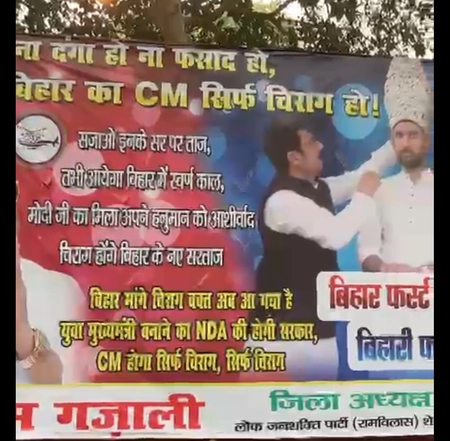
In Bihar, amidst the political shifts and transformations, there has emerged a notable demand for the elevation of Chirag Paswan to the position of Chief Minister. This demand is being visibly expressed through posters that have started appearing across various locations in the state. The posters reflect a growing sentiment among certain factions that believe Chirag Paswan, as a young and dynamic leader, has the potential to lead Bihar towards progress and development.
Chirag Paswan, the leader of the Lok Janshakti Party (LJP), has been a significant figure in Bihar’s political landscape, especially following the demise of his father, Ram Vilas Paswan. The call for his leadership comes at a time when the state is navigating through complex political dynamics, with shifts in alliances and the need for strong governance. Supporters of Paswan argue that his youth and vision for the state could inspire a new wave of governance that prioritizes the needs and aspirations of the people.
The posters not only serve as a medium of expression for his supporters but also indicate a strategic move to consolidate his political base. With Bihar facing numerous challenges, including economic development and social issues, the demand for a change in leadership is resonating with a section of the populace that is eager for innovative solutions. Chirag Paswan’s rise to the Chief Ministership, as advocated by these posters, symbolizes a hope for revitalization in Bihar’s political scenario, aimed at addressing the pressing concerns faced by the citizens.
As the political climate continues to evolve, the coming days will be crucial in determining whether this demand gains traction and translates into tangible political support for Chirag Paswan. The political landscape in Bihar remains fluid, and the reactions to these demands from various political entities will significantly influence the direction of governance in the state. The push for Paswan’s leadership may not only reshape the political equations in Bihar but also set the stage for a new chapter in the state’s governance narrative.