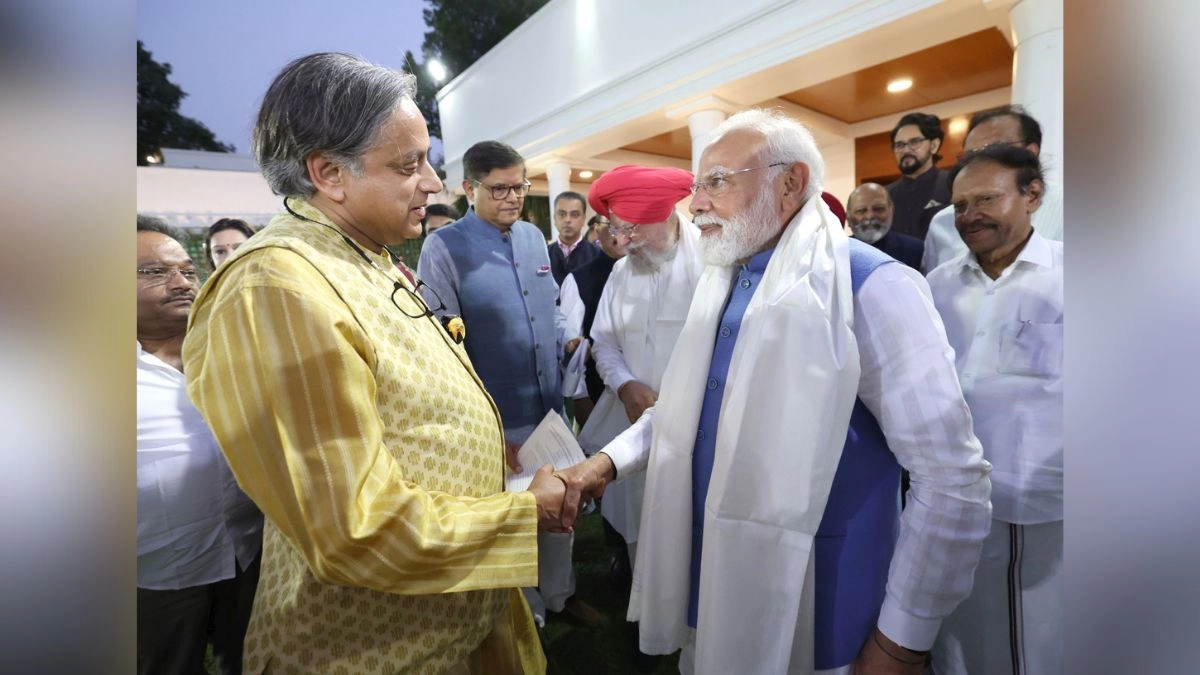
In a recent address during the Op Sindoor event, Prime Minister’s remarks took a sharp turn, drawing attention to the political landscape and particularly targeting the Congress party. The phrase “Some Were Stopped” resonated throughout his speech, hinting at the challenges faced by political opponents and the implications of their past actions. This statement was not merely a rhetorical flourish but rather a pointed critique, suggesting that certain factions within the Congress party had faltered in their governance and leadership, leading to their inability to connect with the electorate effectively.
The Prime Minister’s comments are reflective of the broader narrative in Indian politics, where party rivalries often lead to pointed exchanges and strategic positioning. By highlighting the failures of the Congress, he aimed to reinforce the message that the ruling party has made significant strides in governance and development, contrasting it with the stagnation he associates with the opposition. This approach not only seeks to galvanize support among his base but also serves to remind voters of the consequences of political mismanagement that they may have experienced under previous administrations.
Moreover, the backdrop of the Op Sindoor event, which traditionally carries cultural significance, added layers to the Prime Minister’s message. He skillfully intertwined cultural themes with political commentary, reinforcing the idea that governance and cultural identity are intricately linked. By invoking sentiments tied to tradition, he sought to create a narrative of progress that resonates with the populace on both emotional and rational levels. As political dynamics evolve, such speeches become pivotal in shaping public perception and mobilizing party loyalty.
In conclusion, the Prime Minister’s address at the Op Sindoor event encapsulates the ongoing struggle for political dominance in India, where past mistakes of rival parties are leveraged to paint a picture of competence and progress. His strategic use of language and cultural references not only aimed to critique the Congress party but also to solidify his own party’s standing as a beacon of hope and development. As the political landscape continues to evolve, speeches like these will play a crucial role in influencing voter sentiment and shaping the future of governance in the country.