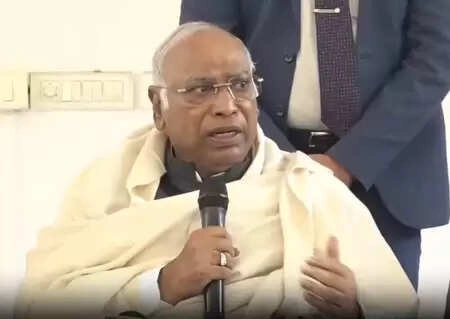
In a recent statement, Mallikarjun Kharge characterized the National Herald case as being driven by a spirit of revenge. He emphasized that the outcome of the case represents a victory for truth. The National Herald case has been a point of contention in Indian politics, particularly involving allegations against prominent figures and political parties. Kharge’s comments highlight the belief that the legal proceedings were not merely about the law but were influenced by political motives aimed at undermining the opposition.
Kharge’s assertion underscores a broader narrative in Indian politics where legal battles often intertwine with political rivalry. He suggested that the motivations behind such cases are frequently rooted in a desire to settle scores rather than to uphold justice. This perspective resonates with many who view the National Herald case as part of a larger pattern of using legal mechanisms to target political adversaries.
The victory he refers to is not just a legal triumph but also a symbolic one, representing resilience against perceived political oppression. Kharge’s remarks call attention to the need for a fair judicial process, free from the influence of political agendas. As the political landscape continues to evolve, such cases will likely remain pivotal in shaping public discourse and perceptions of justice in India.
In conclusion, Kharge’s statements reflect a deep-seated concern regarding the politicization of legal processes and the implications it has for democracy. The National Herald case serves as a reminder of the ongoing struggle for truth and justice in an environment where political motivations can often overshadow genuine legal considerations. He advocates for a system that prioritizes fairness and integrity, ensuring that the law serves its intended purpose rather than being wielded as a tool for retribution.