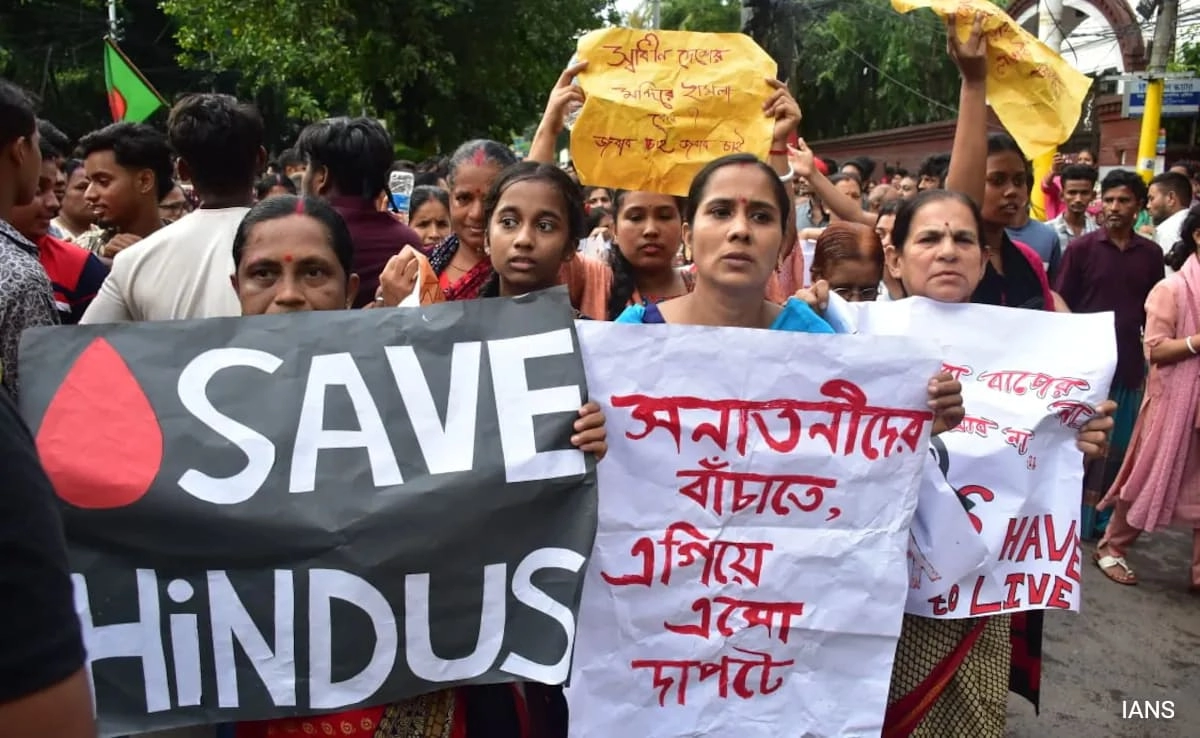
India has expressed strong condemnation of the recent killing of a prominent Hindu leader in Bangladesh, which has intensified tensions between the two neighboring countries and highlighted concerns over the treatment of minorities in the region. The murder of the leader, who was known for his advocacy of Hindu rights, has sparked outrage in India and raised alarms about the stability of communal harmony in Bangladesh. Indian officials have characterized the incident as emblematic of a broader pattern of violence against minority communities in Bangladesh, particularly Hindus, who have faced increasing persecution in recent years.
The Indian government’s response underscores its commitment to protecting the rights of minorities, not just within its own borders but also across South Asia. The Ministry of External Affairs has issued a statement expressing deep concern over the incident and calling for swift action to bring the perpetrators to justice. Officials have urged the Bangladeshi government to take decisive steps to ensure the safety and security of minority communities, emphasizing that the protection of all citizens is crucial for maintaining social harmony and stability in the region.
Moreover, this incident has sparked a significant political discourse in India, with various political leaders and activists calling for greater attention to the plight of minorities in Bangladesh. The killing has reignited debates about the role of religion in politics and governance in both countries. Critics argue that the Yunus regime in Bangladesh has failed to adequately address the rising tide of communal violence and has not done enough to safeguard the rights of its Hindu population. As the situation unfolds, the Indian government is likely to continue to monitor developments closely, balancing diplomatic relations with a firm stance on human rights and minority protection.
The ramifications of this incident may extend beyond immediate diplomatic concerns, potentially influencing broader regional dynamics. As India and Bangladesh navigate their complex relationship, the treatment of minorities will remain a critical issue that could affect bilateral ties. The Indian government faces pressure from domestic constituencies to take a stronger stand against perceived injustices in neighboring countries, which may lead to a reevaluation of diplomatic strategies in South Asia. Ultimately, the killing of the Hindu leader serves as a stark reminder of the challenges that persist in ensuring the safety and rights of minority communities in a region marked by historical tensions and communal strife.