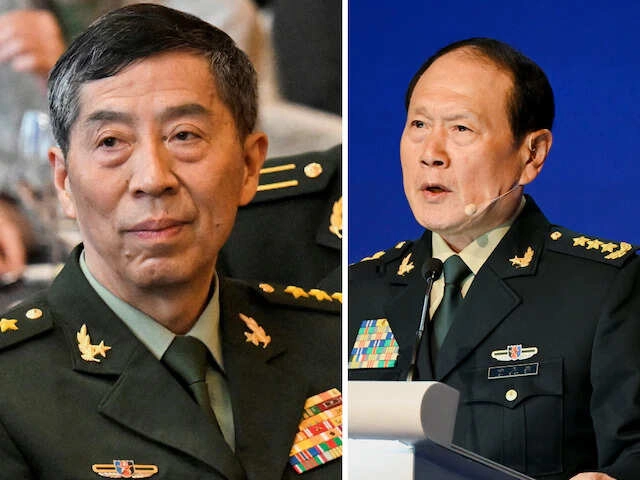
The recent developments surrounding the execution of two former defense ministers in China have sparked significant speculation and debate regarding the underlying political dynamics at play. Traditionally, such drastic measures were interpreted as a reflection of internal strife within the Communist Party or as a means to consolidate power by the current leadership. However, new theories suggest a more complex narrative that transcends mere political rebellion or dissent against President Xi Jinping.
The two former ministers, who held substantial influence in the military and government, were viewed as key figures in China’s defense strategy. Their sudden downfall raises questions about the stability of Xi’s regime and the extent to which dissent is tolerated within the upper echelons of the party. Analysts posit that this could be a strategic move by Xi to eliminate any potential rivals or to reinforce his authority amidst growing tensions within the party. The starkness of the punishment—death penalty—highlights the severe consequences of any perceived disloyalty or failure to adhere to Xi’s policies.
Moreover, this situation sheds light on the broader context of Chinese politics, where power struggles often unfold behind closed doors. The executions may serve as a warning to other officials about the risks of deviating from party lines or challenging Xi’s leadership. It also raises concerns about the rule of law in China, as the motivations behind such actions remain ambiguous and possibly driven by personal vendettas rather than legal precedents. The shift in theory regarding these executions illustrates the fluid nature of political narratives in China, where the interpretation of events can change rapidly based on emerging information and the shifting allegiances within the party.
In summary, the executions of the former defense ministers indicate a potentially significant turning point in Chinese politics, suggesting a tightening grip by Xi Jinping and a possible recalibration of power dynamics within the Communist Party. As the world watches closely, the implications of these events could resonate far beyond China’s borders, influencing international relations and security considerations in the region. The unfolding narrative continues to intrigue observers, leaving many to ponder what the future holds for China’s political landscape.