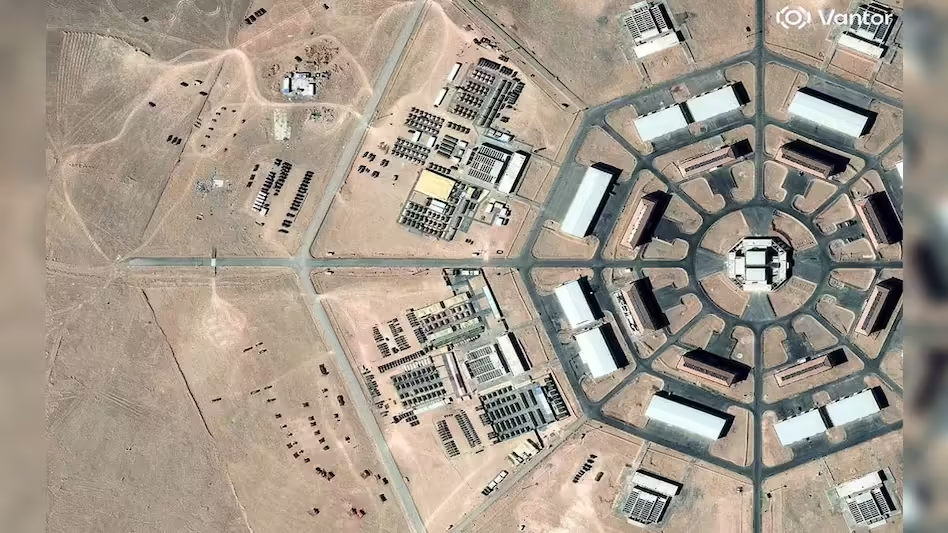
In the desert regions of China, a concerning military development is underway, characterized by the establishment of a formidable nuclear fortress comprising 80 launch pads and military bases. This ambitious plan has raised alarms among international observers, as it suggests a significant escalation in China’s nuclear capabilities. The construction of such extensive facilities in desolate areas indicates a strategic move to enhance its deterrent power while also ensuring a secure and resilient command structure.
The implications of this nuclear fortress extend beyond mere numbers; it reflects China’s intent to bolster its position in the global power hierarchy. By fortifying its military infrastructure, China aims to project strength and assert its influence in strategic regions, particularly in the context of ongoing geopolitical tensions. The presence of 80 launch pads signifies a preparedness to respond to potential threats, while also serving as a message to rival nations regarding its growing military prowess.
Furthermore, the development of these military installations in remote desert areas could allow China to maintain a degree of operational secrecy, making it challenging for adversaries to monitor and assess its capabilities accurately. This strategy not only enhances China’s defensive posture but also complicates the security calculations of other nations, particularly those within its immediate vicinity. As the international community watches closely, the establishment of this nuclear fortress could lead to an arms race in the region, prompting neighboring countries to reconsider their own defense strategies in response to China’s evolving military landscape.