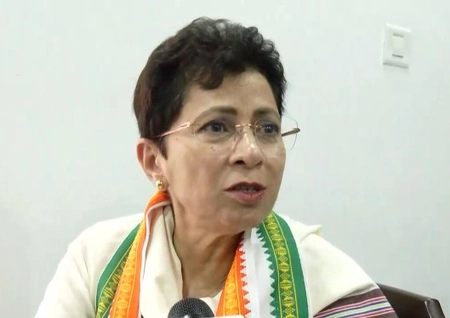
BJP consistently formulates new slogans while conveniently forgetting the old ones, as stated by MP Kumari Selja. This remark highlights a critical perspective on the Bharatiya Janata Party’s approach to political messaging and public engagement. According to Selja, the BJP’s tendency to introduce fresh slogans can be interpreted as a strategy to divert attention from their earlier promises and commitments. This practice raises concerns about the party’s accountability and reliability, as it seems to prioritize short-term gains over long-term responsibilities.
Kumari Selja’s critique sheds light on the broader implications of such political behavior. When a party frequently changes its narrative, it can create confusion among the electorate, making it challenging for voters to hold politicians accountable for their previous statements and actions. This pattern might also undermine public trust in political institutions, as citizens may perceive these changes as a lack of sincerity or commitment to their stated goals. In a democratic setup, the ability to maintain consistency in messaging is crucial for fostering trust and transparency between leaders and the public.
Moreover, Selja’s statement invites a reflection on the importance of political accountability. Voters deserve to know whether the promises made by their leaders are being fulfilled or merely set aside for more appealing alternatives. By continuously introducing new slogans, the BJP may be attempting to reshape its image or distract from its past failures, which can be detrimental to the democratic process. In conclusion, Kumari Selja’s observations serve as a reminder of the need for political parties to remain grounded in their commitments and to uphold a consistent narrative that reflects their values and promises to the public.