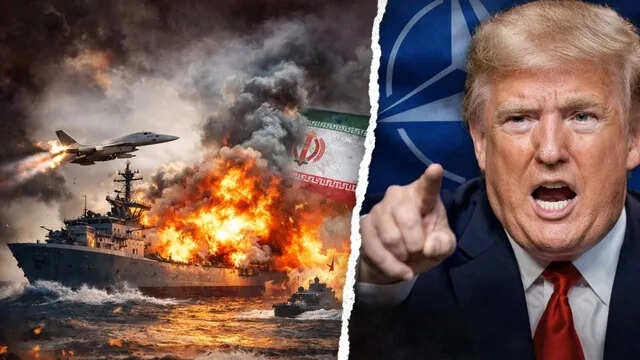
Amidst escalating tensions with Iran, the United States appears to be preparing to distance itself from NATO. Former President Donald Trump has been vocal about his criticism of the alliance, labeling it ineffective during crucial times. He characterized NATO as a “paper tiger,” suggesting that it has failed to provide the necessary support and assistance when needed the most. This sentiment reflects a growing disillusionment within certain segments of American politics regarding traditional alliances and multilateral organizations.
Trump’s comments resonate with a faction of American lawmakers and citizens who believe that the U.S. should prioritize its national interests over international commitments. The notion of NATO being a “paper tiger” implies that the organization lacks the resolve and capability to respond effectively to threats, particularly in the context of conflicts involving nations like Iran. This perspective raises questions about the future of U.S. foreign policy and its commitment to collective defense agreements that have been foundational since the Cold War.
As the geopolitical landscape continues to shift, the implications of a U.S. withdrawal from NATO could be profound. It may embolden adversaries and destabilize regions where NATO has historically played a stabilizing role. Furthermore, such a move could lead to a reevaluation of alliances, with European nations forced to reconsider their security strategies in the absence of American leadership. The situation underscores the delicate balance between national sovereignty and the benefits of collective security in an increasingly complex global environment.