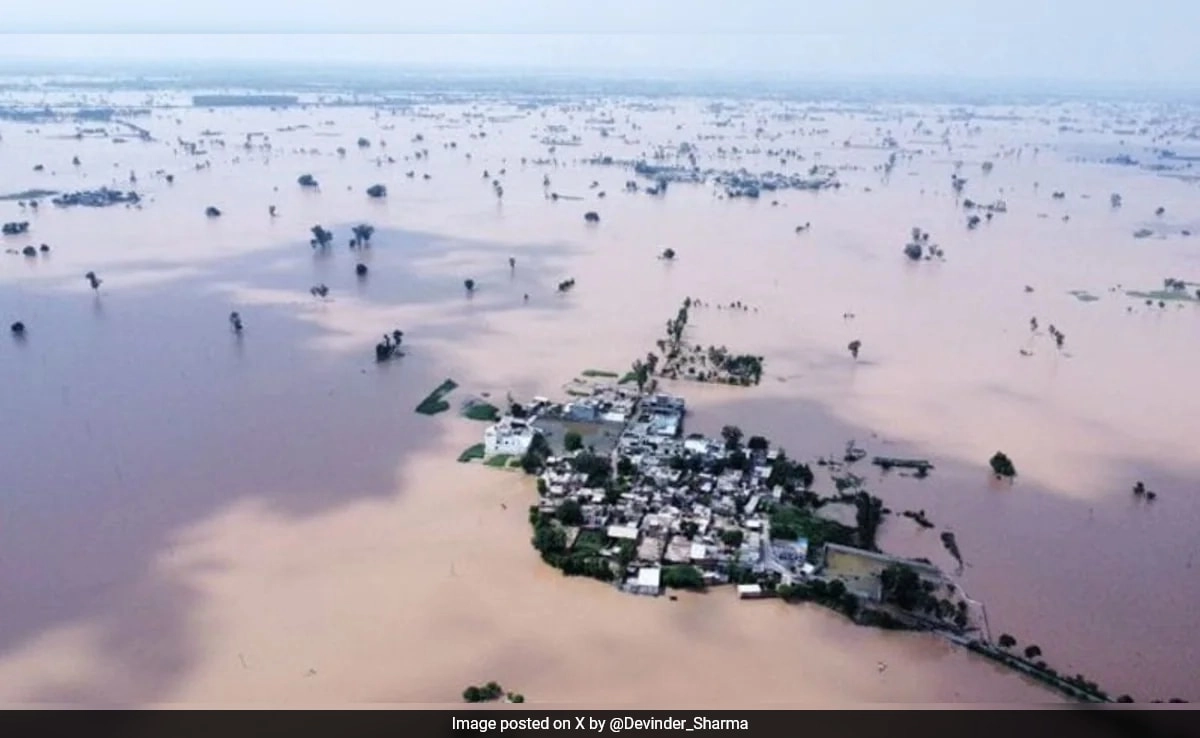
The recent floods in Punjab have marked a devastating chapter in the region’s history, with reports indicating that 37 lives have been lost and all 23 districts affected. This catastrophic event is being referred to as the worst flooding the area has experienced since 1988. The relentless monsoon rains, which began earlier this season, have overwhelmed rivers and drainage systems, leading to widespread inundation of homes, farmland, and critical infrastructure. Communities that were once thriving are now grappling with destruction and despair as they face the immediate consequences of this natural disaster.
Emergency response teams have been deployed across the affected districts, working tirelessly to rescue stranded individuals and provide essential supplies to those in need. The scale of the disaster has prompted local and national authorities to declare a state of emergency, with relief efforts underway to assist displaced families. Many residents have been forced to evacuate their homes, seeking refuge in temporary shelters set up by the government and non-governmental organizations. The situation remains precarious as the water levels continue to fluctuate, and the threat of further rain looms over the region.
In addition to the immediate human toll, the floods have also wreaked havoc on Punjab’s agricultural sector, which is vital to the local economy. Fields that once flourished with crops are now submerged, raising concerns about food security and the livelihoods of farmers. Experts warn that the long-term impact of this flooding could lead to a prolonged economic downturn if recovery efforts are not adequately supported. As the region grapples with these challenges, the resilience of the communities will be tested, and the need for comprehensive disaster management and climate adaptation strategies becomes ever more apparent.
In the wake of this tragedy, the government and humanitarian organizations are mobilizing resources to provide relief and begin the arduous task of rebuilding. The plight of the affected families has garnered attention both nationally and internationally, prompting calls for support and solidarity. As Punjab navigates this crisis, the focus will not only be on immediate relief efforts but also on implementing measures to mitigate the effects of future disasters. The lessons learned from this flooding may influence policies aimed at improving infrastructure and enhancing disaster preparedness, ultimately striving to safeguard the region against the increasing unpredictability of climate-related events.