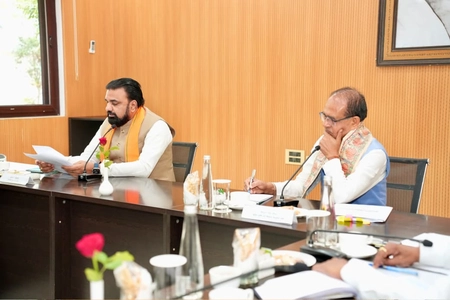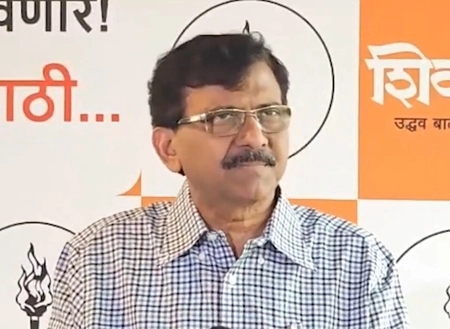
Sanjay Raut, a prominent political figure, has made a significant statement regarding the current political landscape, particularly focusing on the resignation of Dharmendra Pradhan. Raut’s comments suggest that if Mohan Bhagwat, the chief of the Rashtriya Swayamsevak Sangh (RSS), cannot secure the resignation of Pradhan, he should refrain from returning to Nagpur, the headquarters of the RSS.
This statement reflects the ongoing tensions within the political arena, where alliances and loyalty are continually being tested. Raut’s remarks highlight the intricate relationship between political leaders and organizations like the RSS, which plays a crucial role in shaping the policies and strategies of the ruling party. By calling out Bhagwat in such a direct manner, Raut is not only questioning the influence of the RSS but also the effectiveness of its leadership in managing party dynamics.
The demand for Pradhan’s resignation could be indicative of deeper issues within the party or government, possibly linked to dissatisfaction with his performance or political decisions. Raut’s assertion implies that leadership figures must take responsibility for their actions and that accountability is paramount in maintaining trust and unity within the party ranks. As the political climate continues to evolve, such statements could have significant ramifications, influencing both public perception and internal party cohesion.
In essence, Raut’s challenge to Bhagwat serves as a reminder of the complex interplay between political authority and organizational influence. The outcome of this situation could potentially reshape political alliances and impact the future direction of the party, making it a critical moment in the ongoing political discourse in the region.