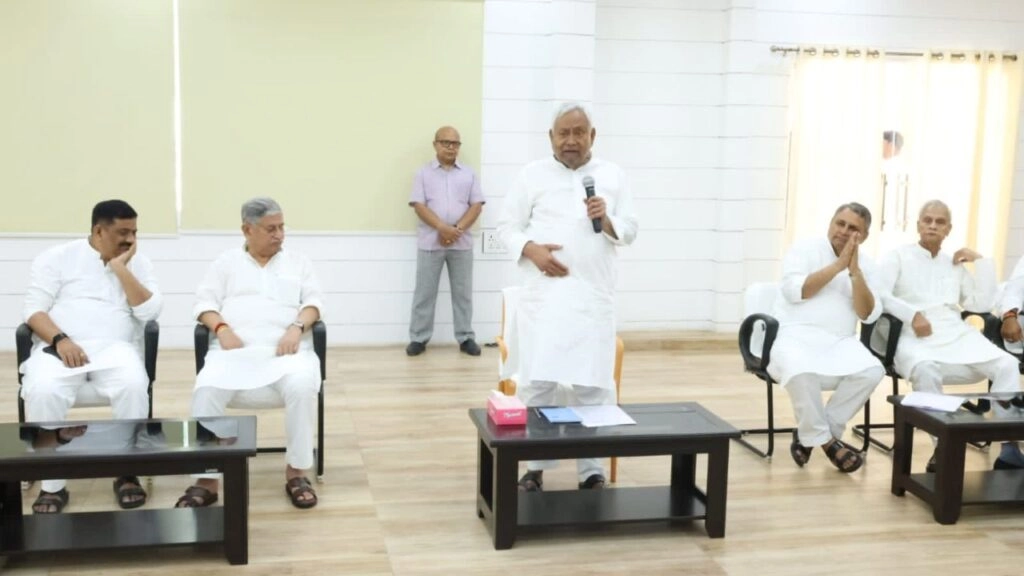
Nitish Kumar’s unexpected visit to the Rajya Sabha has raised eyebrows and sparked discussions within the political landscape of Bihar and beyond. As the Chief Minister of Bihar and a prominent leader of the Janata Dal (United) or JD(U), his decision to attend the Rajya Sabha without any prior announcement or fanfare has left many questioning the motivations behind this move. What has been particularly striking is the silence of the entire top leadership of the JD(U) during this visit. In a political environment where every action is often accompanied by commentary and strategic positioning, the lack of response from the party’s senior leaders is intriguing.
The absence of commentary from JD(U) leaders could suggest a few possibilities. One interpretation is that there may be internal disagreements or a lack of consensus regarding their political strategy, particularly as it pertains to their relationship with larger national parties. The party has historically shifted alliances to maintain relevance and influence in the politics of Bihar, and this silence could indicate a moment of reflection or uncertainty concerning their future direction. Alternatively, it is also possible that the leadership is opting for a more subdued approach to avoid drawing unnecessary attention to the party’s internal dynamics or potential rifts.
Moreover, Nitish Kumar’s visit comes at a time when political alliances in the region are increasingly complex, and his party is navigating a delicate balance between maintaining its identity and forging necessary alliances to ensure political survival. The silence from the JD(U) leadership could also be a strategic choice, allowing them to observe the political landscape and gauge reactions before publicly articulating their stance. In the fast-paced realm of Indian politics, where statements can ignite controversies and shift public opinion, this cautious approach might serve as a calculated move to safeguard the party’s interests.
In conclusion, Nitish Kumar’s silent visit to the Rajya Sabha, coupled with the muted response from JD(U)’s top leadership, reflects the intricate and often unpredictable nature of political maneuvering in Bihar. As the political climate continues to evolve, it will be essential to watch for any forthcoming statements or actions from the JD(U) that might clarify their position and strategic intentions moving forward. The coming days may provide more insights into the party’s plans and how they intend to navigate the challenges that lie ahead.