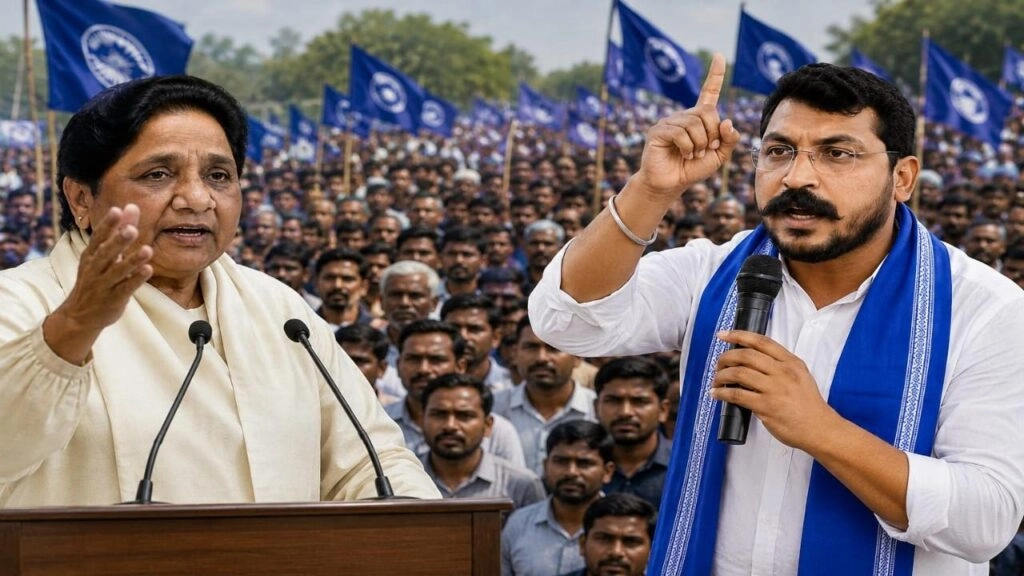
In Uttar Pradesh, the competition for Dalit votes is intensifying, with key political figures like Mayawati and Chandrashekhar Azad taking strategic steps to consolidate their support among this crucial demographic. Mayawati, the leader of the Bahujan Samaj Party (BSP), is mobilizing her organization to strengthen her party’s foothold among Dalits, a significant voting bloc in the state. The BSP has historically championed the rights and welfare of Dalits, and Mayawati’s efforts reflect her commitment to maintaining this legacy. Her organization is actively engaging with the community, focusing on grassroots outreach to ensure that their concerns and needs are prioritized in the political narrative.
On the other side, Chandrashekhar Azad, who leads the Bhim Army, is also making significant strides in the battle for Dalit votes. His approach is marked by a concentrated focus on specific districts, aiming to establish a robust presence in areas with a high concentration of Dalit voters. Azad’s strategy involves mobilizing local support and addressing the unique challenges faced by the Dalit community in these regions. By concentrating his efforts, he aims to create a strong grassroots movement that resonates with the aspirations and grievances of Dalits, positioning himself as a formidable alternative to Mayawati’s BSP.
The dynamics of this electoral contest are further complicated by the broader political landscape in Uttar Pradesh, where various parties are vying for the allegiance of Dalit voters. The significance of Dalit votes cannot be overstated, as they play a critical role in determining the outcomes of elections in the state. As both Mayawati and Azad ramp up their efforts, the stakes are high, and the battle for this influential demographic is set to shape the future of politics in Uttar Pradesh. The strategies employed by both leaders will likely evolve as they respond to the changing sentiments of the Dalit community, making this a pivotal moment in the state’s political arena.