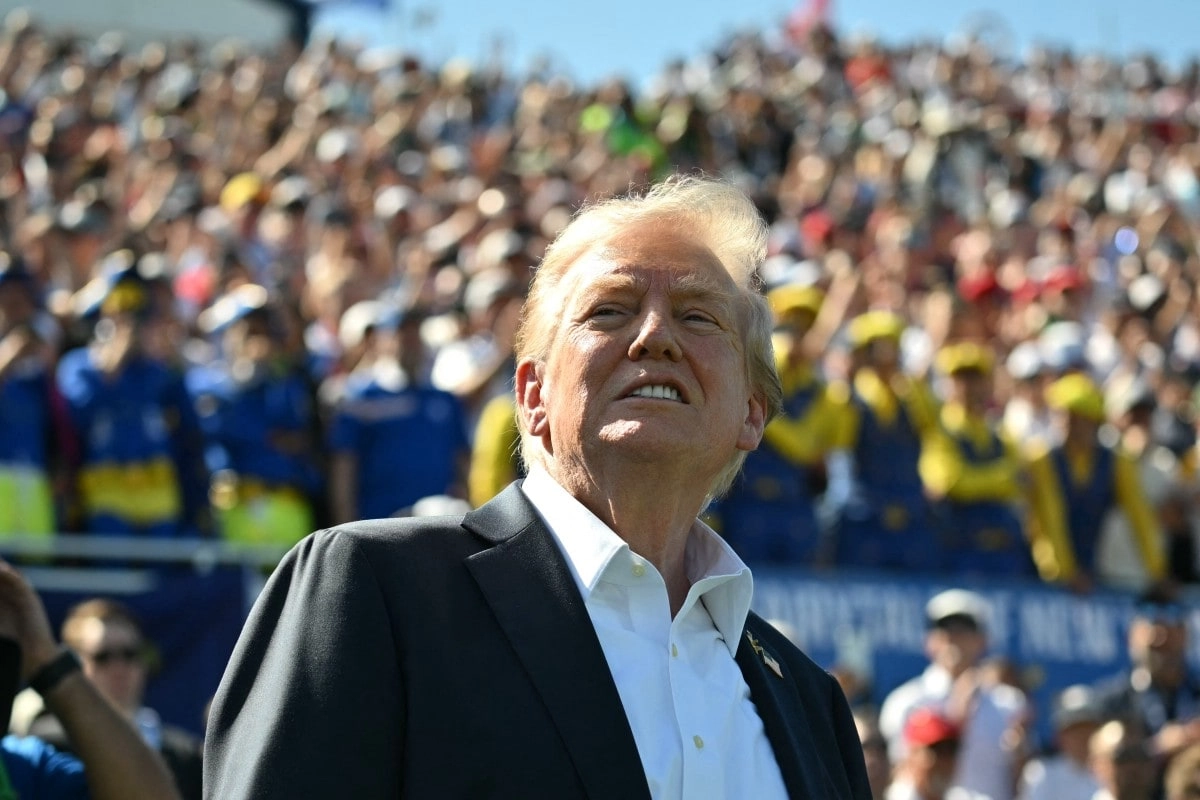
In recent years, the political landscape has seen a significant shift, particularly with the emergence of Donald Trump as a dominant figure. One of the most notable aspects of his political strategy has involved targeting various groups and individuals, particularly those associated with Wall Street and academia. His rhetoric often positions these sectors as emblematic of the elite establishment, which he claims is out of touch with the needs and desires of the average American. This approach resonates with a substantial portion of the electorate who feel disenfranchised by conventional political and economic systems. As a result, Trump’s line of fire has often focused on the perceived excesses and failures of Wall Street executives and academics, highlighting their roles in creating policies that many believe have contributed to widening economic inequality.
Trump’s criticisms of Wall Street are multifaceted. He frequently accuses financial institutions of prioritizing profits over the welfare of American workers, suggesting that their practices have led to job outsourcing and economic instability. This narrative appeals to voters who have experienced the negative impacts of corporate decisions firsthand. By framing Wall Street as a symbol of greed and corruption, Trump effectively galvanizes support from those seeking a political outsider who promises to dismantle the established systems that they believe have failed them. His administration’s policies often reflected this sentiment, aiming to roll back regulations that he argued stifled economic growth and innovation, even if those regulations were designed to prevent the excesses that led to the 2008 financial crisis.
On the academic front, Trump’s criticisms have similarly struck a chord with his base. He has often accused universities of fostering liberal ideologies at the expense of free speech and traditional values. This sentiment resonates in a society increasingly divided along ideological lines, with many feeling that academia has become a bastion of elitism that alienates conservative viewpoints. By targeting universities, Trump not only aims to undermine the credibility of academic institutions but also to rally support from a demographic that feels their perspectives are marginalized. His administration sought to promote policies that would reform higher education, including measures aimed at increasing accountability and transparency in how federal funds are allocated to colleges and universities.
As Trump continues to navigate his political landscape, his focus on Wall Street and academia serves a dual purpose: it solidifies his identity as a champion of the common man while simultaneously undermining institutions he views as adversaries. This strategy has implications that extend beyond his immediate political ambitions; it shapes the broader discourse around class, privilege, and power in America. By framing his opponents in stark terms, he not only galvanizes his supporters but also challenges the legitimacy of established institutions, prompting a reevaluation of their roles in society. Whether this approach will yield long-term benefits for Trump or lead to greater polarization remains to be seen, but it undoubtedly marks a significant chapter in American political history.