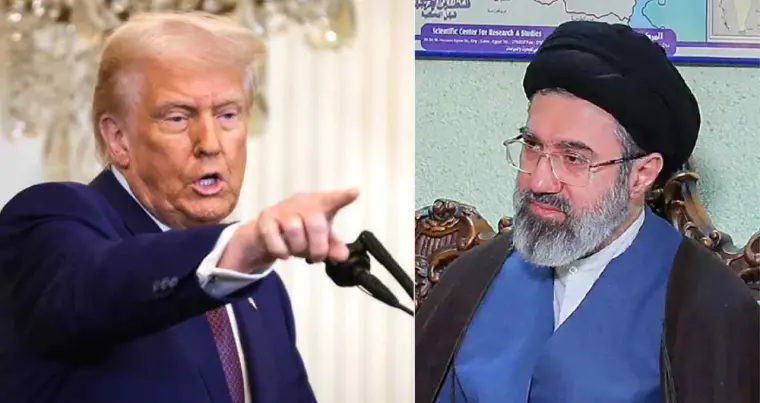
In a significant escalation of tensions, former President Donald Trump issued a 48-hour ultimatum that has captured international attention. This ultimatum, marked by its urgency, signals a potentially critical turning point in U.S.-Iran relations. Trump’s statement comes in response to a series of provocative actions by Iran, which has consistently challenged American interests in the region. The ultimatum could serve as a strategic maneuver aimed at pressuring Iran to reconsider its actions, particularly its nuclear ambitions and its involvement in regional conflicts.
Iran, for its part, has responded with a stern warning, emphasizing its resolve in the face of external pressures. Iranian officials have made it clear that they will not be easily swayed by threats or ultimatums. This response underscores the complexity of diplomatic relations between the two nations, which have been fraught with hostility since the 1979 Iranian Revolution. The current situation is further complicated by broader geopolitical dynamics, including the involvement of other regional powers and the ongoing discussions surrounding nuclear agreements.
The implications of this standoff are far-reaching. A failure to de-escalate could lead to heightened military tensions in the Middle East, with potential repercussions for global oil markets and security alliances. Analysts are closely watching how both sides will navigate this precarious situation, as the stakes are incredibly high. The next 48 hours will be crucial in determining whether diplomacy can prevail or if the situation will spiral into conflict. As the world watches, the actions taken by both Trump and Iranian leadership could set the stage for the future of U.S.-Iran relations and regional stability.