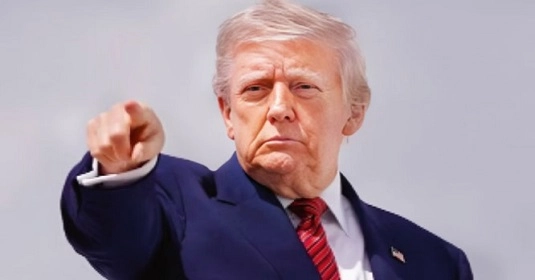
Former President Donald Trump recently made a bold assertion regarding America’s military capabilities amid rising tensions with Iran. He emphasized that the United States possesses an extensive arsenal of weaponry, suggesting that this could potentially allow for prolonged military engagements if necessary. Trump’s comments come at a time when geopolitical tensions in the Middle East are escalating, raising concerns about the possibility of armed conflict.
The statement reflects Trump’s broader perspective on U.S. military strength, which he has often touted during his time in office and beyond. By highlighting the “unlimited” nature of American weaponry, he seems to be reinforcing the notion that the U.S. is prepared for any potential confrontation. This perspective could be interpreted in various ways, including as a warning to adversaries or as a reassurance to allies regarding America’s commitment to maintaining its military readiness.
However, the implications of such remarks are complex. While having a vast array of military resources might deter some aggressors, it also raises questions about the consequences of prolonged military engagements. History has shown that extended conflicts can lead to significant human and economic costs, as well as potential backlash against U.S. involvement abroad. Critics of Trump’s statement may argue that relying solely on military might is not a sustainable or effective strategy for resolving international disputes. Instead, they may advocate for diplomatic solutions and dialogue as a means of addressing tensions, particularly in volatile regions like the Middle East.
Ultimately, Trump’s comments underscore the ongoing debate about America’s role on the global stage and the appropriate balance between military strength and diplomatic efforts. As tensions with Iran continue to simmer, the discussion surrounding U.S. military readiness and foreign policy will likely remain a focal point in political discourse. The challenge will be determining how best to navigate these complex dynamics while striving for peace and stability in the region.