
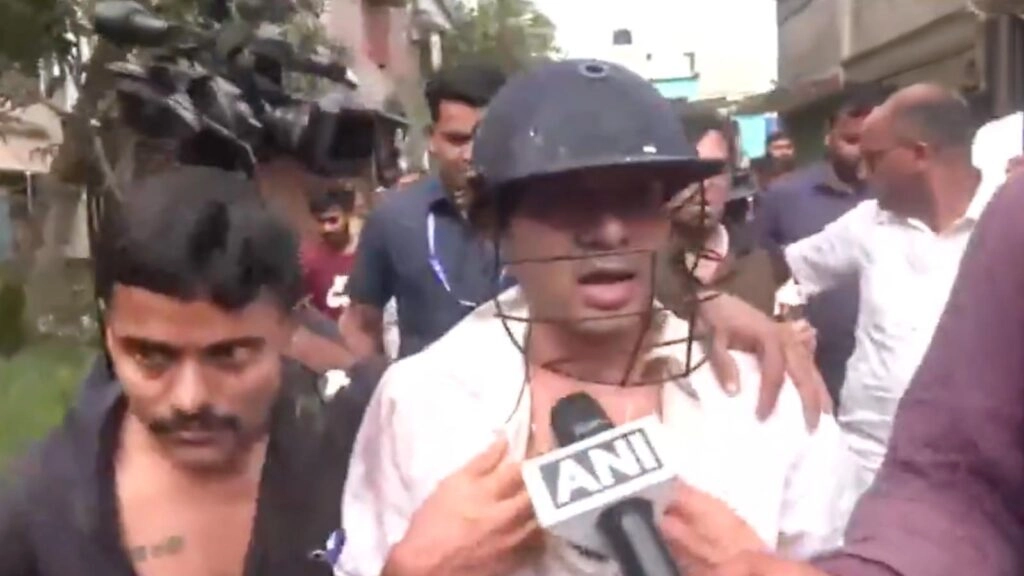
Abhishek Banerjee, the National General Secretary of the Trinamool Congress (TMC) and a prominent political figure in West Bengal, has reportedly faced a violent assault that has left him hospitalized. This alarming incident underscores the escalating tensions in the region’s political landscape. Banerjee, who is also the nephew of West Bengal Chief Minister Mamata Banerjee, expressed grave concerns for his safety, claiming, “They want to kill me.” His statements reflect the heightened level of hostility that political leaders often encounter in a charged atmosphere, particularly in a state known for its fierce political rivalries.
The attack on Banerjee has not only raised questions about his security but also the broader implications for political discourse in West Bengal. As a key figure in the TMC, his role is crucial in shaping the party’s strategies and responses to opposition challenges. The incident comes at a time when the TMC is facing mounting pressure from rival parties, and such acts of violence could further polarize the political environment. It is essential for authorities to take such threats seriously and ensure the safety of all political leaders, as their well-being is integral to the functioning of a healthy democracy.
In the aftermath of the attack, there has been a surge of reactions from various political factions, with many expressing solidarity with Banerjee. The incident serves as a stark reminder of the volatility that can accompany political rivalry in the region. As the situation unfolds, it will be interesting to observe how the TMC and Banerjee himself navigate the challenges posed by this attack and the subsequent public and political response. The incident highlights the urgent need for addressing political violence and fostering a more peaceful and constructive political dialogue in West Bengal.


