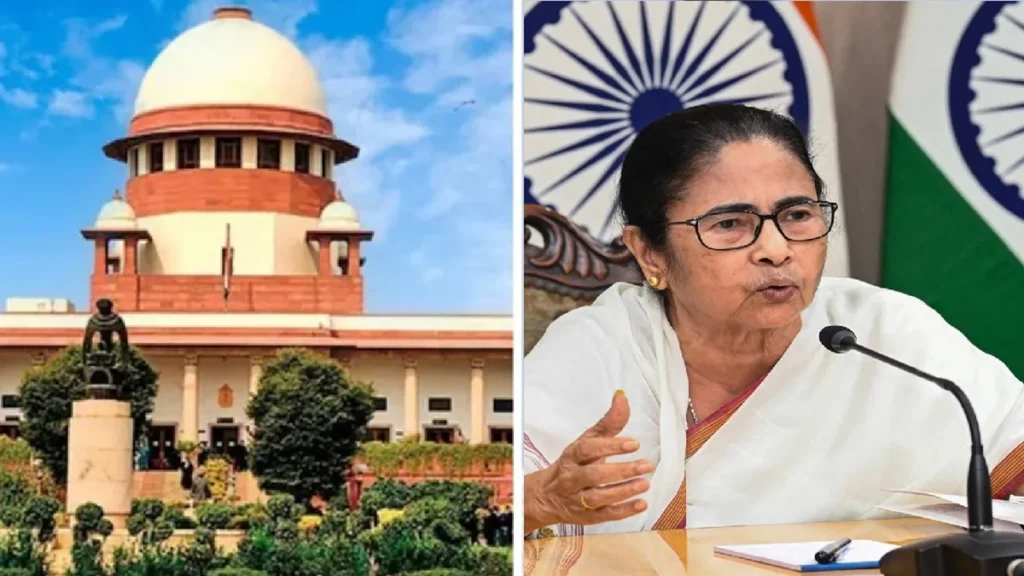
The Trinamool Congress (TMC) has taken a significant step by filing a petition in the Supreme Court concerning the recent deployment of central government employees as counting observers in West Bengal. This move has sparked considerable debate and controversy within the political landscape of the state. The TMC argues that the presence of these central employees could potentially undermine the electoral process and the integrity of the counting of votes, given the sensitive nature of the political environment in Bengal.
The party’s petition raises concerns about the impartiality and neutrality of these observers, suggesting that their involvement may lead to undue influence or interference in the election process. TMC leaders have expressed apprehension that the presence of central authorities in a state where the party has a stronghold could create an imbalance and affect the outcome of the counting process. They believe that the counting should be overseen by local officials who are familiar with the state’s political dynamics and are less likely to be influenced by external pressures.
Furthermore, the TMC’s legal action reflects its commitment to ensuring a fair electoral process and safeguarding the interests of its constituents. The party has consistently voiced its opposition to what it perceives as overreach by the central government in state affairs. By bringing this matter to the Supreme Court, TMC is not only seeking to challenge the deployment of central observers but is also standing up for the principles of federalism and state autonomy. As the case proceeds, it will be crucial to observe how the Supreme Court addresses these concerns and what implications this may have for future elections in West Bengal and beyond.
In conclusion, the TMC’s petition highlights the ongoing tensions between state and central authorities in India, particularly in the context of elections. The outcome of this legal battle could set a precedent for how electoral processes are managed in the country, especially in regions where political affiliations are deeply entrenched. It remains to be seen how this situation will unfold and what impact it may have on the political landscape in West Bengal.