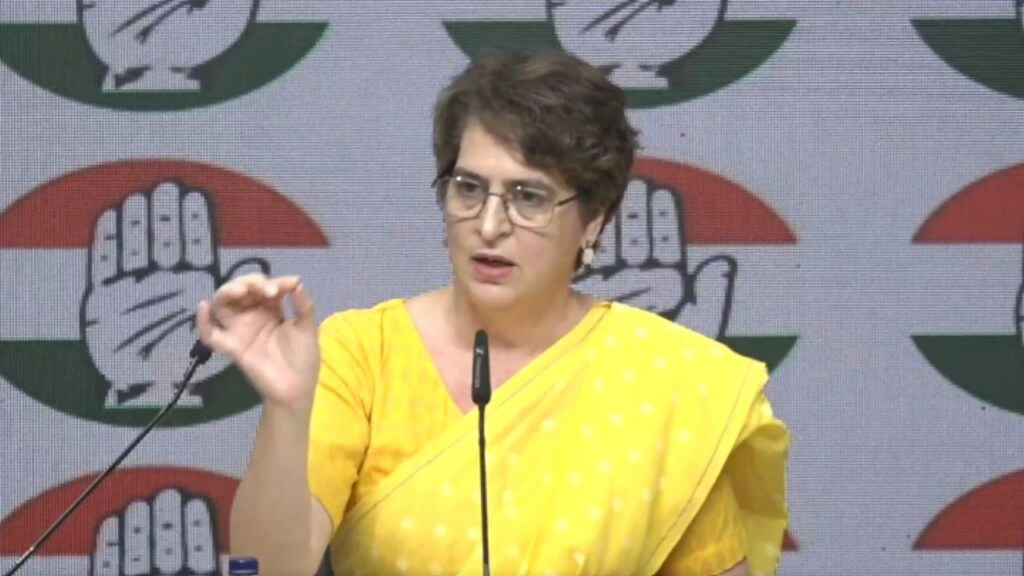
Priyanka Gandhi has recently voiced strong concerns regarding the current political landscape in India, particularly focusing on the implications of women’s reservation in legislative bodies. She characterized the push for such reservations as a “conspiracy,” suggesting that it is strategically designed to divide and weaken the opposition. According to Gandhi, if the various opposition parties manage to consolidate their efforts and present a united front, the ruling government led by Prime Minister Narendra Modi will face significant challenges in the upcoming elections.
Gandhi’s remarks highlight the complexities of political strategies in India, where the issue of women’s representation has become a focal point for debate. While the intention behind women’s reservation is to enhance female participation in politics, she argues that the timing and manner of its introduction may be aimed at distracting voters and fragmenting the opposition. This perspective suggests a deeper underlying motive in the political discourse, where the empowerment of women is juxtaposed against the backdrop of electoral strategy.
Furthermore, Gandhi’s call for unity among opposition parties underscores the critical need for collaboration in the face of what she perceives as manipulative tactics from the ruling party. She believes that a cohesive opposition can effectively challenge the current government, which she argues has failed to address pressing issues facing the nation. In her view, the success of any political movement hinges on the ability of diverse parties to come together, transcending individual agendas for the greater good of democracy and representation.
Priyanka Gandhi’s comments resonate with many who advocate for both women’s rights and political integrity, raising important questions about the intersection of gender and governance in India. As the nation prepares for future elections, the discourse surrounding women’s reservation will likely continue to evolve, reflecting the ongoing struggle for equality and representation in a complex political environment.