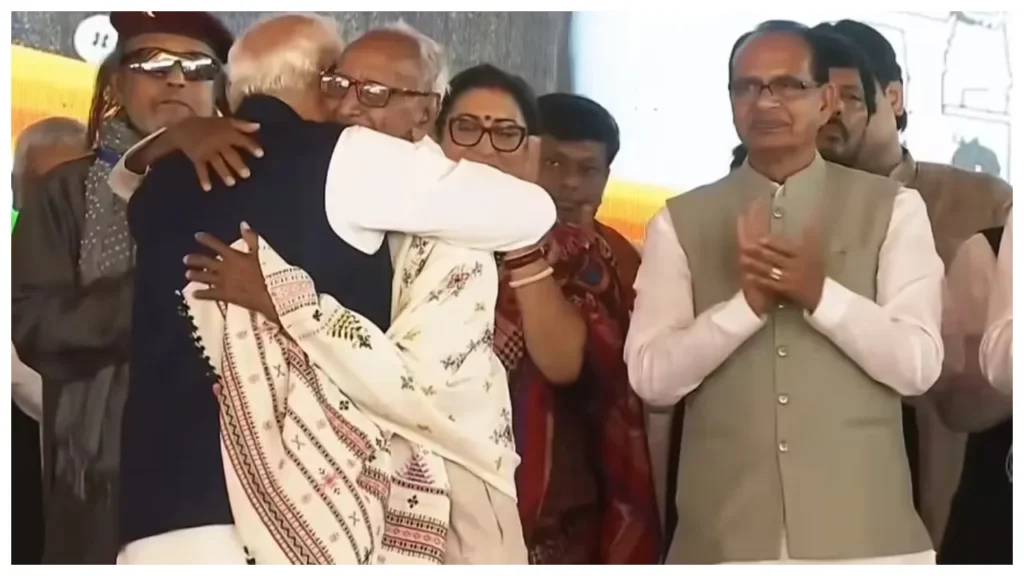
The oath ceremony of Suvendu Adhikari has garnered significant attention, particularly due to a heartwarming moment that unfolded on stage. During the event, Prime Minister Narendra Modi demonstrated his respect for senior leader Makhan Lal Sarkar by touching his feet, a gesture that is deeply rooted in Indian culture and signifies reverence for elders. This moment not only highlighted the importance of tradition but also illustrated the bond between political leaders and their mentors, reinforcing the value of respect and humility in leadership roles.
As the ceremony progressed, various dignitaries and political figures gathered to witness the occasion, reflecting the importance of Suvendu Adhikari’s new role. The presence of high-profile attendees, including PM Modi, underscored the political significance of Adhikari’s appointment. The event was marked by speeches and pledges, emphasizing commitment to governance and the welfare of the people. Such ceremonies often serve as a platform for leaders to outline their vision and strategies, and this occasion was no different, with promises of progress and development taking center stage.
In addition to the ceremonial proceedings, the touching moment between PM Modi and Makhan Lal Sarkar resonated with many viewers, symbolizing the passing of wisdom and experience from one generation of leaders to the next. This act of touching feet is not just a cultural norm; it represents a deep-seated respect for those who have paved the way in political spheres. Viewers have expressed their appreciation for the gesture, recognizing it as a reminder of the values that underpin public service and leadership in India.
Overall, the oath ceremony of Suvendu Adhikari was not merely a political event; it was a celebration of tradition, respect, and the collective aspirations of the people. As the new leader steps into his role, the expectations are high, and the support from seasoned leaders like PM Modi and Sarkar is likely to play a crucial role in guiding his journey. The event serves as a reminder of the significant interplay between culture and politics in India, where gestures of respect can transcend mere formality and resonate with the public on a deeper level.