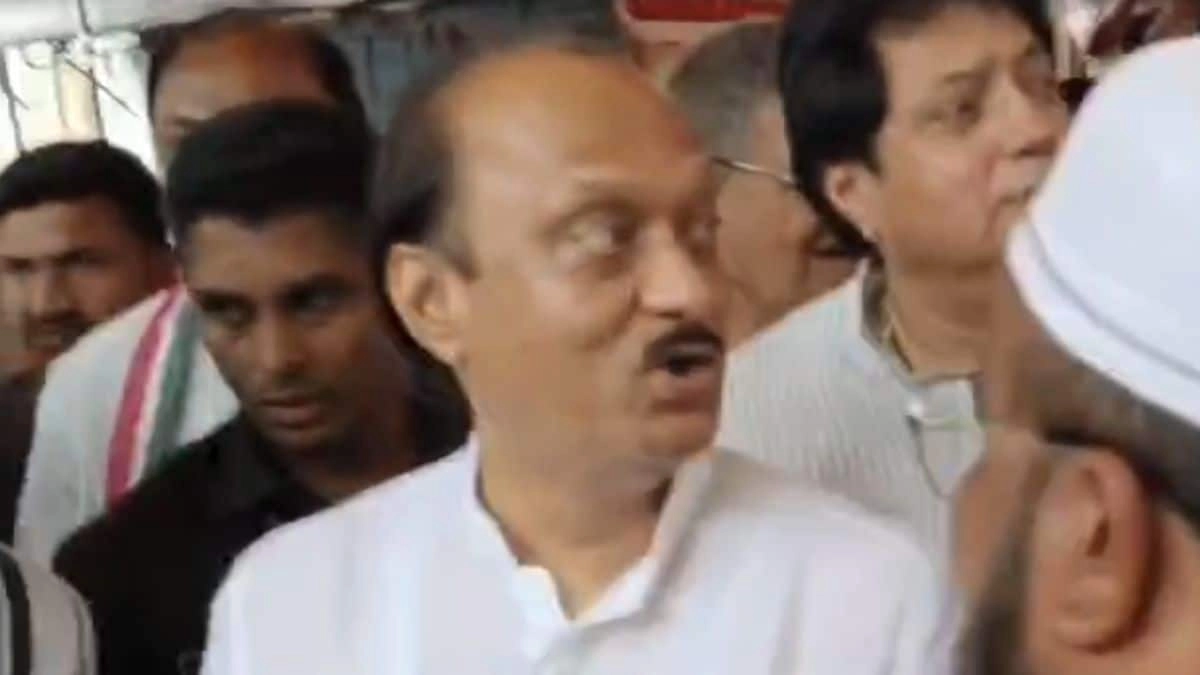
In a recent political gathering, a heartwarming moment unfolded when a party worker openly expressed affection for Ajit Pawar, a prominent political figure in Maharashtra. The worker, amidst the hustle and bustle of the event, enthusiastically declared, “Love you, Dada,” a gesture that resonated with many in attendance. This spontaneous outburst highlighted the strong emotional connection that party workers often feel towards their leaders, reflecting a sense of camaraderie and loyalty that is vital in the realm of politics.
Ajit Pawar’s response to this affectionate declaration was equally noteworthy. Rather than brushing off the compliment or responding in a formal manner, he reciprocated the warmth with a smile and an acknowledgment that underscored the importance of such grassroots support. His reaction not only endeared him further to the crowd but also reinforced the idea that political leaders should remain accessible and relatable to their constituents. This interaction served as a reminder that behind the political façade, human emotions play a significant role in shaping relationships between leaders and their supporters.
The incident, although seemingly trivial, encapsulates a broader narrative about the dynamics of political engagement in India. It emphasizes how personal connections can influence public perception and support for political figures. In a landscape often characterized by intense rivalry and ideological divides, moments like these serve to humanize politicians, making them more approachable and fostering a sense of unity among their followers. Such interactions can have lasting implications, as they contribute to a leader’s image and can galvanize support during critical times, especially ahead of elections.
Furthermore, this incident sheds light on the evolving nature of political communication. In an age where social media often dominates conversations, face-to-face interactions like these remain invaluable. They allow political leaders to gauge the sentiments of their supporters directly, fostering an environment where feedback is immediate and personal. Ajit Pawar’s ability to engage with his followers in such a meaningful way showcases the significance of interpersonal relationships in politics, reminding us that at the heart of governance is the connection between leaders and the people they serve.