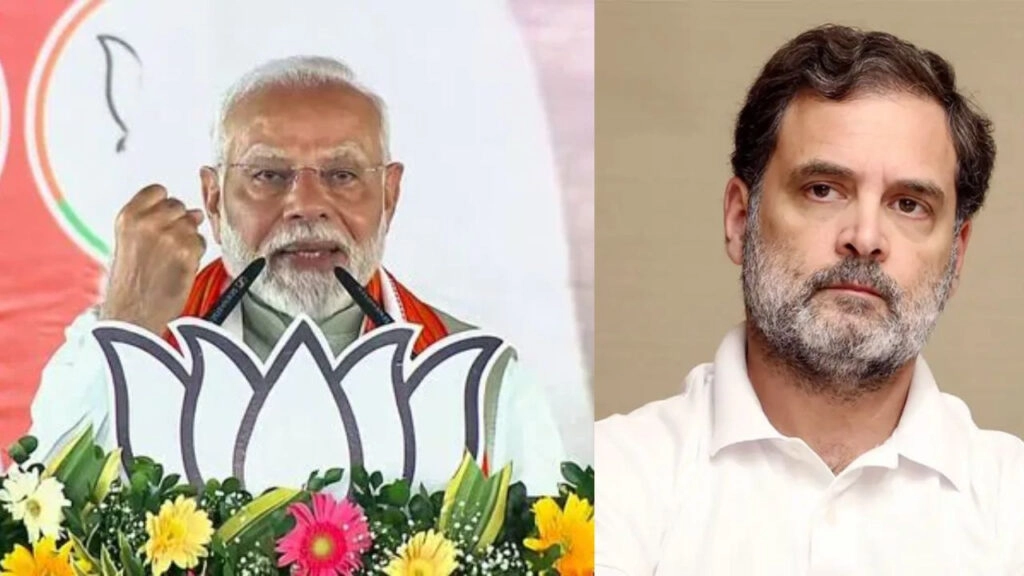
In recent months, Prime Minister Narendra Modi has intensified his campaign efforts in southern India, a region that has historically been challenging for his party, the Bharatiya Janata Party (BJP). His aggressive outreach aims to consolidate support in a territory dominated by regional parties, particularly the Dravida Munnetra Kazhagam (DMK) in Tamil Nadu. This strategic push underscores the BJP’s ambition to expand its influence in an area where opposition parties have traditionally held sway. Modi’s approach includes a series of rallies, public meetings, and initiatives designed to resonate with the local populace, highlighting development and governance.
Amid this backdrop, the Congress party, which has been a key player in Indian politics, appears to be struggling to maintain its footing in the South. Rahul Gandhi, the party’s prominent leader, has been noticeably absent from the political landscape in this region during a crucial period. His absence raises questions about the Congress’s strategy and capability to counter Modi’s aggressive campaign. The lack of visible leadership could potentially weaken the party’s position, especially in an electoral environment where regional dynamics are critical.
The alliance between Congress and DMK is also under scrutiny, as there are growing concerns about its stability. The collaboration, which was initially formed to challenge the BJP’s dominance, seems to be facing internal friction. Reports suggest that differences in political strategy and local issues may be straining the partnership. If the Congress-DMK alliance falters, it could pave the way for the BJP to gain a stronger foothold in the South, fundamentally altering the political landscape of the region. As the situation unfolds, the efficacy of Modi’s campaign and the Congress’s response will be pivotal in determining the future of political alliances and voter sentiment in southern India.