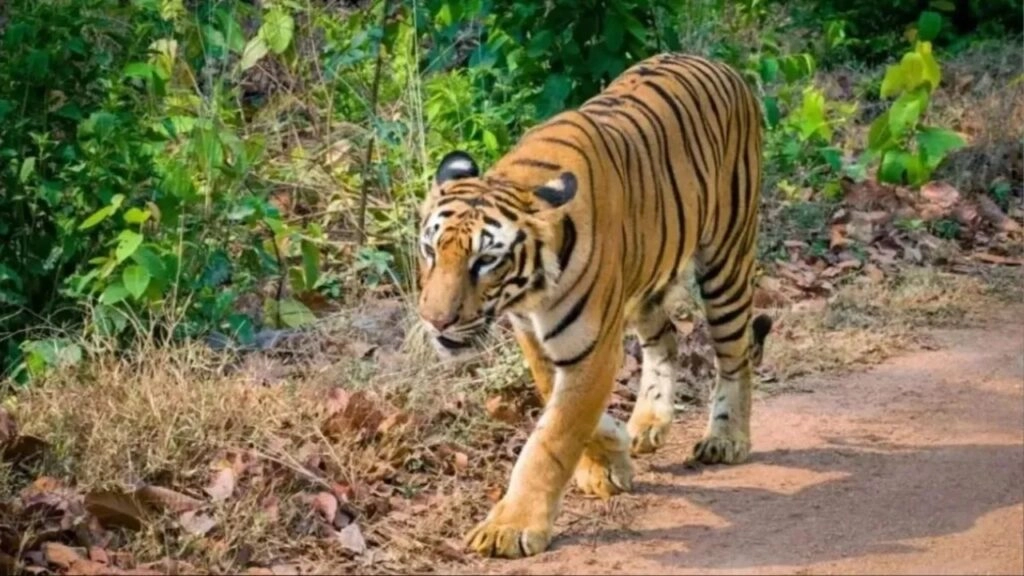
In a significant development in Pauri Garhwal, Uttarakhand, villagers have expressed immense relief following the capture of a notorious man-eater tiger that had instilled fear in the community. This tiger had been responsible for several attacks on livestock and, more alarmingly, had claimed human lives, creating a climate of dread among the residents. The local population, primarily dependent on farming and livestock rearing, had been living in constant apprehension, altering their daily routines and limiting their movements, especially during twilight hours when the tiger was most active.
The capture was the result of a coordinated effort by wildlife authorities and local forest officials, who set up traps after receiving multiple reports of the tiger’s aggressive behavior. The operation took several weeks, involving careful planning and monitoring of the tiger’s movements to ensure both the safety of the villagers and the animal. Once trapped, the tiger was safely relocated to a secure facility where it will be kept under observation. This measure not only aims to safeguard the villagers but also to rehabilitate the tiger in a controlled environment, ensuring that it does not pose a threat to human life in the future.
For the villagers, this incident underscores a broader issue of human-wildlife conflict in the region, as urban encroachment and habitat loss continue to push wild animals into closer proximity with human settlements. While the immediate danger has been addressed, the community is now calling for more sustainable solutions to coexist with wildlife, advocating for better management of natural resources and wildlife corridors. They hope that by promoting awareness and implementing protective measures, they can reduce the likelihood of similar incidents in the future, ensuring both human safety and the conservation of wildlife. The successful capture of the man-eater tiger marks a critical step toward restoring peace in the community, allowing villagers to reclaim their sense of security.