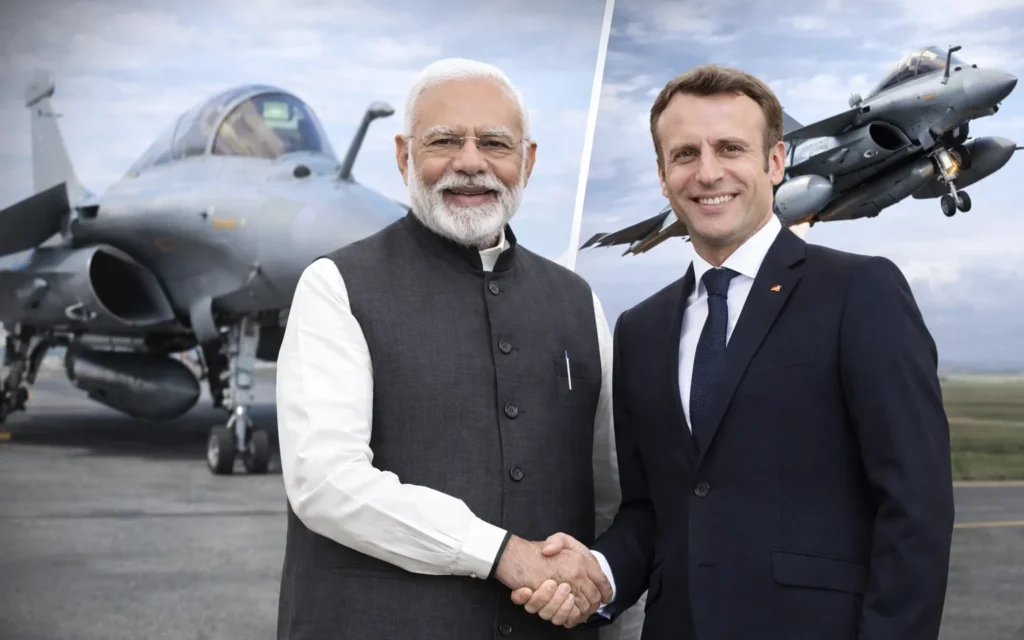
French President Emmanuel Macron recently responded to criticisms from the opposition regarding the Rafale deal, asserting that the agreement primarily benefits India. This remark came in the context of ongoing debates surrounding the controversial defense procurement, which has faced scrutiny in both France and India. Macron emphasized that the deal is strategically advantageous for India, as it enhances the country’s defense capabilities and strengthens its position in regional security dynamics.
During a parliamentary session, Macron addressed concerns raised by political opponents who questioned the transparency and fairness of the Rafale deal. He argued that the acquisition of these advanced fighter jets is essential for modernizing India’s armed forces and ensuring national security. By investing in such sophisticated technology, India is not only bolstering its military strength but also fostering a closer partnership with France, which has implications for defense cooperation in the broader Indo-Pacific region.
Macron’s statement reflects a broader narrative in which international defense agreements are often framed as mutually beneficial partnerships. In this case, while the opposition may focus on the deal’s financial aspects and potential allegations of corruption, Macron’s response highlights the strategic importance of the Rafale jets for India. By reinforcing India’s defense capabilities, the deal is positioned as a crucial element in addressing regional threats and enhancing stability.
Moreover, Macron’s comments serve to rally support for the deal among both the French and Indian public. They underscore a commitment to collaboration between the two nations, promoting the idea that such defense agreements contribute to shared security interests. In this light, the Rafale deal is not merely a transaction but a significant step toward deeper bilateral relations, which can yield long-term benefits for both countries in terms of defense innovation and security partnerships.