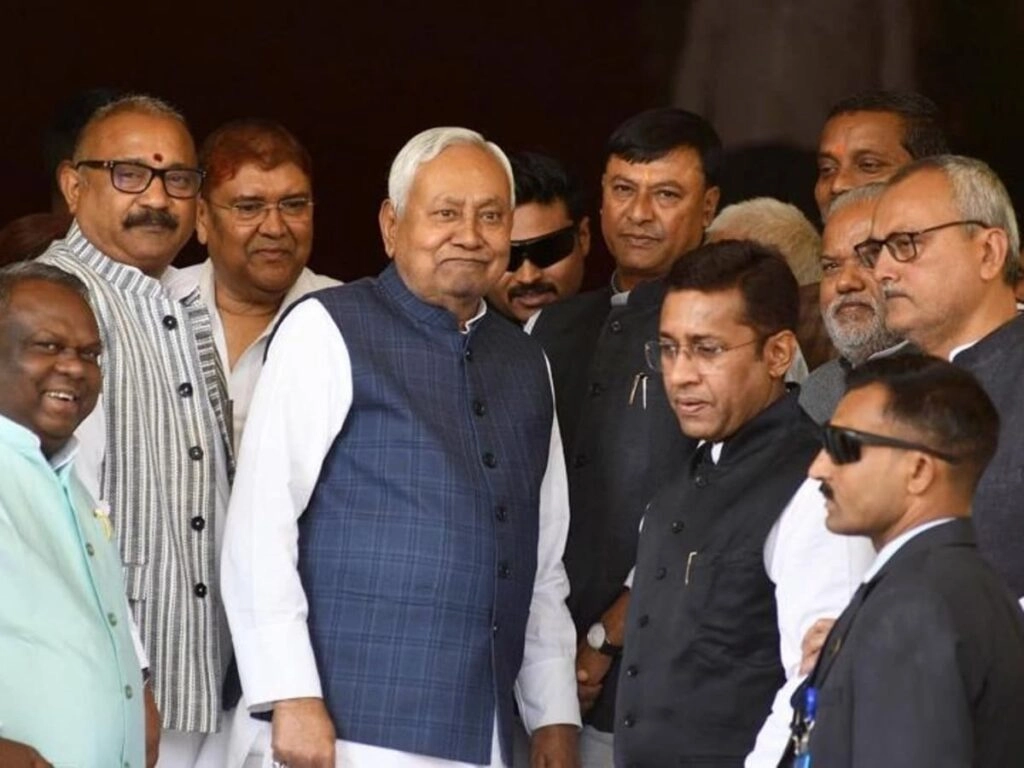
The political landscape in Bihar appears to be experiencing significant shifts, as discussions surrounding the potential end of the Janata Party (JP) era gain momentum. At the center of these discussions is Chief Minister Nitish Kumar, whose political maneuvers and ambitions are under scrutiny. Many are speculating about his possible shift to national politics, particularly his rumored intentions to move to Delhi. This speculation raises questions about the future of Bihar under his leadership and the fate of the JP era that has defined the state’s politics for decades.
Nitish Kumar has been a dominant figure in Bihar’s political arena, steering the state’s governance through various challenges and changes. However, as the political dynamics evolve, the relevance of the JP party is being questioned. With the national political scene becoming increasingly competitive, Kumar’s aspirations for a broader role could signal a pivotal moment not just for him, but for his party and the state. The discussions surrounding his potential move to Delhi are fueled by a combination of personal ambition and strategic considerations, as Kumar weighs the benefits of expanding his influence on a national scale against the responsibilities he holds in Bihar.
The implications of Kumar’s possible departure from state politics are profound. If he were to transition to a national role, it could lead to a power vacuum in Bihar, prompting a scramble among political contenders to fill the void. This shift could also alter the political landscape in Bihar, potentially diminishing the influence of the JP party and its supporters. Observers are keenly watching how these developments unfold, as they could reshape the future of governance and political representation in Bihar. The fate of the JP era hangs in the balance, with Nitish Kumar’s next moves likely to be decisive in determining its trajectory.