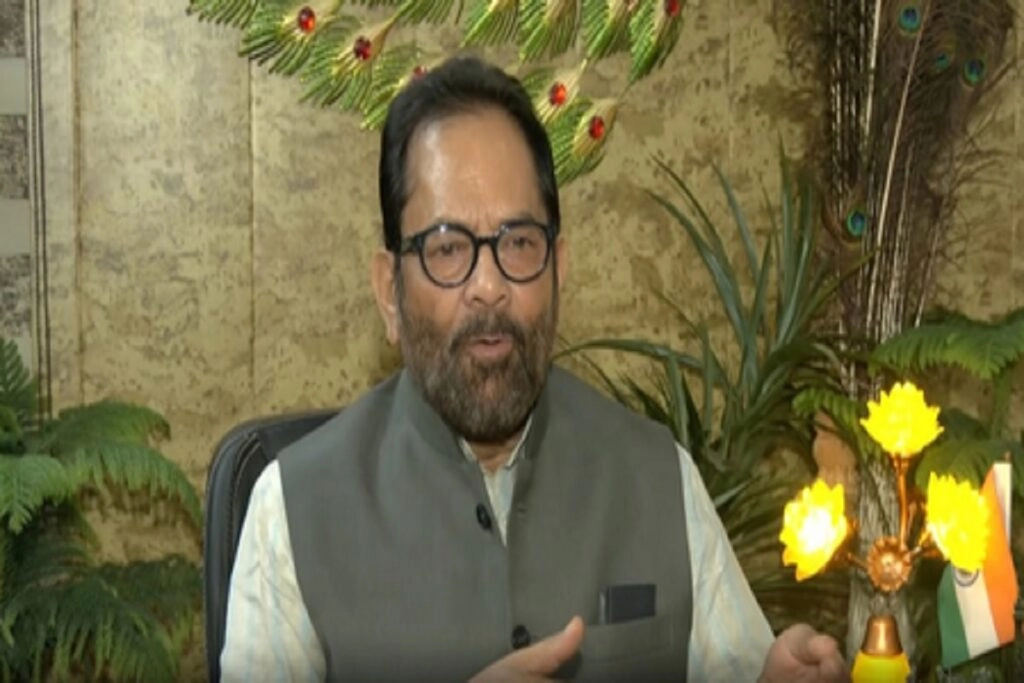
Mukhtar Abbas Naqvi, a prominent political figure, has recently made a striking comparison of Congress to a worthless asset, suggesting that the party lacks both value and significance in the current political landscape. His comments reflect a broader sentiment among some political analysts and commentators who perceive Congress as struggling to maintain its influence and relevance in an increasingly competitive environment. Naqvi’s assertion implies that Congress, once a dominant force in Indian politics, has deteriorated in its ability to connect with the electorate and respond effectively to contemporary challenges.
The remarks come at a time when Congress is facing considerable internal strife and external challenges, including the rise of regional parties and the dominance of the Bharatiya Janata Party (BJP). Naqvi’s statement serves as a critique not only of Congress’s current state but also of its leadership and strategic direction. By labeling the party as a “worthless asset,” he underscores a perception that Congress has failed to adapt to the changing political dynamics and has lost the trust of the public.
This characterization raises important questions about the future of Congress and its role in Indian politics. As the political landscape continues to evolve, the party must navigate significant hurdles if it hopes to reclaim its former prominence. Naqvi’s comments may resonate with some voters who feel disillusioned by Congress’s recent performance, prompting discussions about the need for revitalization and reform within the party. Ultimately, the effectiveness of Congress in re-establishing itself as a credible political entity will depend on its ability to address these challenges head-on and reconnect with the aspirations of the electorate.