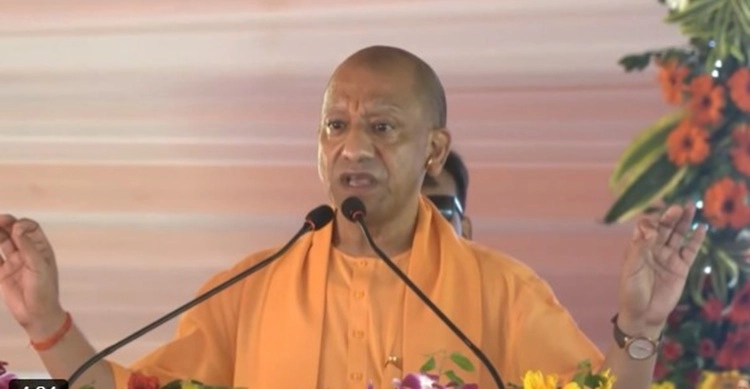
In a recent political discourse, Congress has openly denied the existence of Lord Ram, a significant figure in Hinduism, which has drawn considerable backlash from various sections of society. This denial has not only sparked outrage among Ram devotees but has also led to escalating tensions between political parties. The Samajwadi Party, in particular, has faced criticism for its stance, which some perceive as antagonistic towards the beliefs of millions who revere Lord Ram. The situation has further intensified with the Chief Minister of Uttar Pradesh, Yogi Adityanath, launching a pointed attack on the Samajwadi Party and Congress, accusing them of undermining the cultural and religious sentiments of the Hindu community.
Yogi Adityanath’s remarks highlight the ongoing political struggle in India, where religion and politics often intersect. His comments serve to rally support among Hindu voters, emphasizing the importance of Lord Ram in Indian culture and identity. The Chief Minister’s criticisms are not merely political rhetoric but reflect a broader narrative that seeks to affirm Hindu nationalism in the face of perceived threats from secular and opposition parties. The debate surrounding Lord Ram’s existence has thus become a focal point for larger discussions about identity, faith, and the role of religion in Indian politics.
This situation has also opened up a dialogue about the implications of political discourse on religious beliefs. As political parties navigate these sensitive topics, they must consider the potential repercussions on communal harmony and social cohesion. The divisive nature of such statements can lead to increased polarization among different groups, making it essential for leaders to address these issues with care and sensitivity. The ongoing tensions serve as a reminder of the delicate balance between political aspirations and the deeply held beliefs of the populace, illustrating how intertwined religion and politics remain in contemporary India.