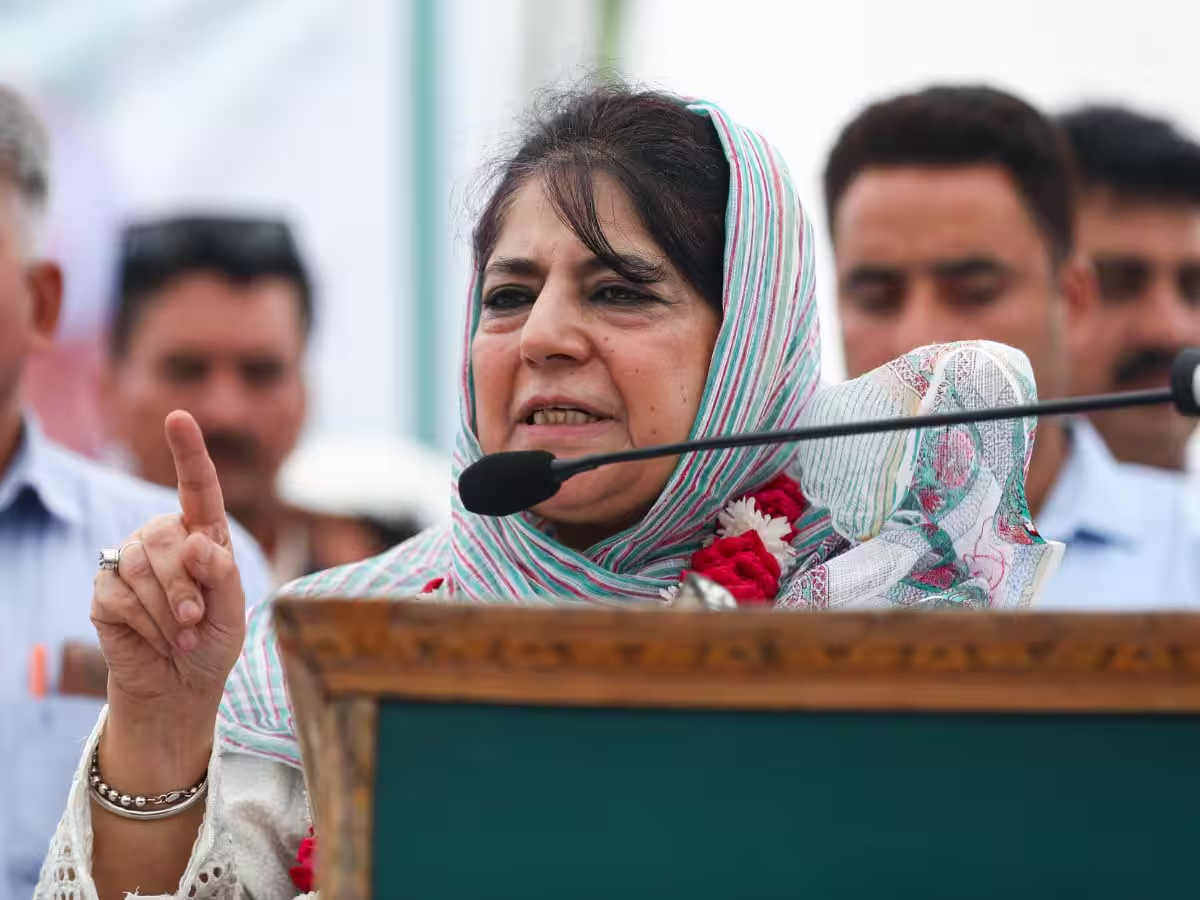
Mehbooba Mufti, the former Chief Minister of Jammu and Kashmir, has recently voiced strong criticism against the Bharatiya Janata Party (BJP), claiming that their political agenda aims to establish a “Kaurava Raj” rather than a “Ram Raj.” This statement reflects her concerns regarding the treatment of women in the current political climate. Mufti argues that the BJP’s governance style is reminiscent of the Kauravas from the epic Mahabharata, who are often associated with tyranny and a lack of respect for others, particularly women. In contrast, the concept of “Ram Raj” symbolizes an ideal governance model characterized by justice, equality, and respect for all individuals, including women.
Her remarks highlight a broader discourse on women’s rights and dignity in India, particularly in regions like Jammu and Kashmir, where cultural and political dynamics often intersect. Mufti’s critique suggests that under the BJP’s leadership, women may face increasing marginalization and disrespect, which she believes contradicts the values of a just society. She emphasizes the need for a political framework that uplifts women and ensures that they are treated with the dignity and respect they deserve.
Mufti’s comments come amidst ongoing debates about gender equality and women’s empowerment in India. By invoking historical and mythological references, she seeks to draw attention to the urgent need for political parties to prioritize women’s rights in their agendas. The implications of her statements resonate beyond regional politics, touching on national conversations about the role of women in society and governance. As India continues to grapple with issues of gender-based violence and discrimination, the call for a “Ram Raj” becomes increasingly relevant, urging leaders to foster an environment where women can thrive and contribute equally to the nation’s progress.