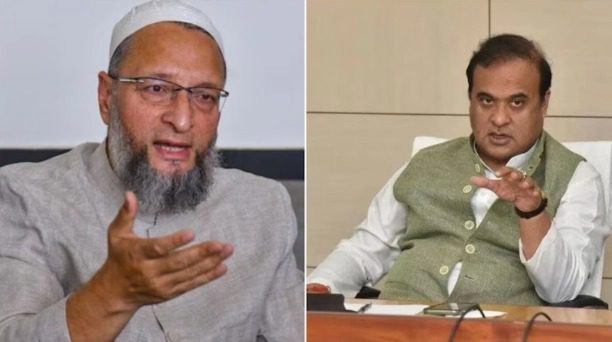
In the lead-up to the Assam Elections in 2026, Himanta Biswa Sarma, the Chief Minister of Assam and a prominent leader of the Bharatiya Janata Party (BJP), has made a bold declaration regarding the political landscape of the state. He confidently stated, “My slogan will work here; Congress will not form the government.” This assertion reflects Sarma’s belief in the strength of his party’s positioning and strategies as they prepare for the upcoming electoral battle. The BJP has been a dominant force in Assam politics in recent years, and Sarma’s conviction suggests that he anticipates continuing this trend in the next elections.
In response to Sarma’s assertions, Asaduddin Owaisi, the leader of the All India Majlis-e-Ittehad-ul-Muslimeen (AIMIM), has launched a counterattack. Owaisi, known for his fierce advocacy for minority rights and his critical stance against the BJP, aims to challenge the narrative that Sarma has put forth. He questions the BJP’s claims and emphasizes the importance of addressing the concerns of marginalized communities in Assam. Owaisi’s rebuttal underscores the competitive nature of the political environment in Assam, where various parties are vying for the support of the electorate.
As the election date approaches, the political atmosphere in Assam is becoming increasingly charged. Both Sarma and Owaisi are gearing up for an intense campaign, each seeking to rally support from their respective bases. The BJP will likely leverage its governance record and development initiatives to appeal to voters, while Owaisi’s AIMIM will focus on issues such as social justice and representation. The contrasting approaches of these leaders highlight the diverse political landscape in Assam, where regional dynamics and community interests play a significant role in shaping electoral outcomes. The stage is set for a captivating electoral contest, with each party striving to secure victory in a state marked by rich cultural diversity and complex socio-political challenges.