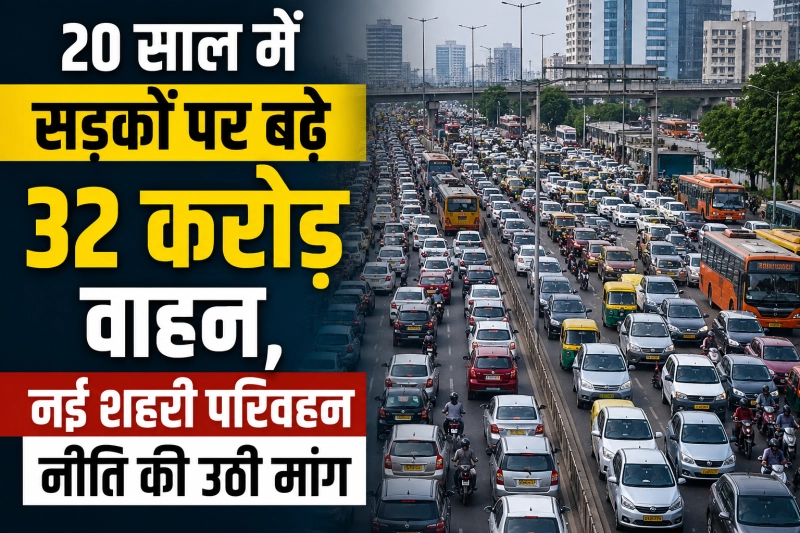
Over the past two decades, the number of vehicles on the roads has surged dramatically, reaching a staggering increase of 32 crore (320 million) vehicles. This significant rise raises important questions about traffic management, urban planning, and environmental impact. With such a vast number of vehicles, cities are facing unprecedented challenges, including congestion, increased air pollution, and a strain on infrastructure. The surge in vehicle ownership reflects changing lifestyles, economic growth, and greater accessibility to transportation options. However, it also underscores the urgent need for effective policies to address the myriad issues that come with such an increase.
In light of these challenges, experts and policymakers are advocating for the formulation of a new transportation policy by 2026. This policy aims to tackle the various implications of having a high number of vehicles on the roads. It will likely focus on several key areas, including the promotion of public transportation, the encouragement of electric vehicles, and the implementation of stricter regulations on emissions. Additionally, the policy may emphasize the importance of developing better infrastructure, such as dedicated bus lanes, pedestrian-friendly areas, and cycling paths, to encourage alternative modes of transportation.
The recommended policy changes are not just about managing the number of vehicles but also about creating a sustainable transportation ecosystem. By promoting cleaner energy sources and reducing dependency on fossil fuels, the government can play a crucial role in mitigating climate change. Furthermore, investing in public transportation systems can enhance mobility for all citizens, making it easier for individuals to commute without contributing to traffic congestion. As urban areas continue to grow, the need for a comprehensive approach to transportation becomes increasingly critical.
Ultimately, the recommendation to introduce a new policy by 2026 reflects a proactive approach to managing the challenges posed by the increasing number of vehicles. It emphasizes the necessity for innovative solutions that prioritize sustainability, efficiency, and the overall well-being of urban populations. By addressing these pressing issues now, policymakers can lay the groundwork for a more sustainable and efficient transportation system that meets the needs of future generations.