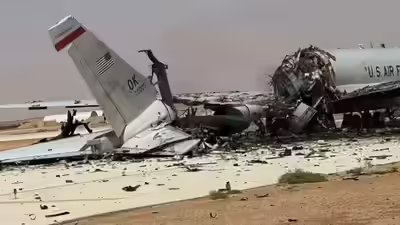
The recent failures of U.S. jets have raised significant concerns, particularly in light of Iran’s advancements in military technology. Reports indicate that Iran has developed new weapons systems that could potentially alter the dynamics of modern warfare. These innovations not only pose a challenge to U.S. air superiority but also indicate a shift in the balance of power in the region. As tensions escalate, understanding the implications of these developments is crucial for assessing future military strategies.
Iran’s new weaponry reportedly includes advanced missile systems and drones that are capable of evading detection and engaging targets with high precision. Such advancements could undermine the effectiveness of U.S. jets, which have long been considered the backbone of American air power. The ability to counteract or neutralize these jets significantly alters the aerial landscape and presents new challenges for U.S. military operations. This situation underscores the importance of continuous advancements in technology and the need for the U.S. to adapt its strategies accordingly.
Furthermore, the implications of these developments extend beyond just the U.S.-Iran relationship. As other nations observe Iran’s progress, there may be a ripple effect, prompting them to enhance their own military capabilities. This could lead to an arms race in the region, further destabilizing an already volatile geopolitical environment. It’s essential for policymakers to take these factors into account when formulating defense strategies and international relations, as the landscape of warfare is continuously evolving. Understanding the full scope of Iran’s capabilities and preparing for potential scenarios will be critical for maintaining security and stability in the region.