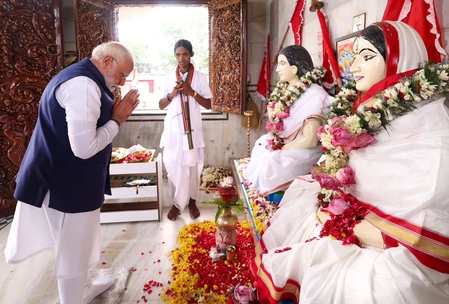
Amidst the election campaign in West Bengal, Prime Minister Modi visited the Matua Thakur Temple to engage in prayer and rituals. This visit highlights the significance of religious and cultural elements in Indian politics, especially during election season. The Matua community, which has a substantial presence in West Bengal, plays a crucial role in the political landscape of the state. By visiting the temple, Modi aimed to connect with the sentiments of the community and reinforce the Bharatiya Janata Party’s (BJP) outreach efforts.
The Matua community has historically faced challenges and has been vocal about their rights and recognition. Modi’s visit to the temple not only symbolizes respect for their traditions but also serves as a strategic move to woo the voters ahead of the elections. It reflects the BJP’s broader strategy of aligning with various communities to build a strong electoral base. Such engagements are pivotal in establishing a rapport with the electorate and showcasing the party’s commitment to their welfare.
In addition to the religious aspect, Modi’s presence at the temple underscores the importance of faith and spirituality in Indian society, particularly in West Bengal, where cultural and religious diversity is prevalent. By participating in rituals and seeking blessings, he aimed to project an image of humility and devotion, resonating with the local populace. The timing of this visit during the election campaign further emphasizes the interplay between politics and religion in shaping voter behavior and preferences in the state.